
Decramastic is a pressed steel tile with a scalloped shape, a bitumen-based coating and a surface of stone chips. It was popular across New Zealand in the 1960s and 1970s because it looked like a tile without the weight. Many of those roofs are now old, and they fail in a distinctive way: the chip washes off, the coating breaks down, and the steel underneath starts to rust, often from the hidden side first.
There is a second issue. WorkSafe warns that decramastic installed before asbestos was phased out may contain asbestos in its coating, and in one case tiles on a 1970s home tested positive for chrysotile. That changes how the roof must be handled, cleaned and removed. This page covers both the roofing and the safety side. For fibre cement roofs, see asbestos roof replacement.
Pricing: every roof gets a free on-site measure and an itemised written quote, with a fixed price agreed before any work starts.
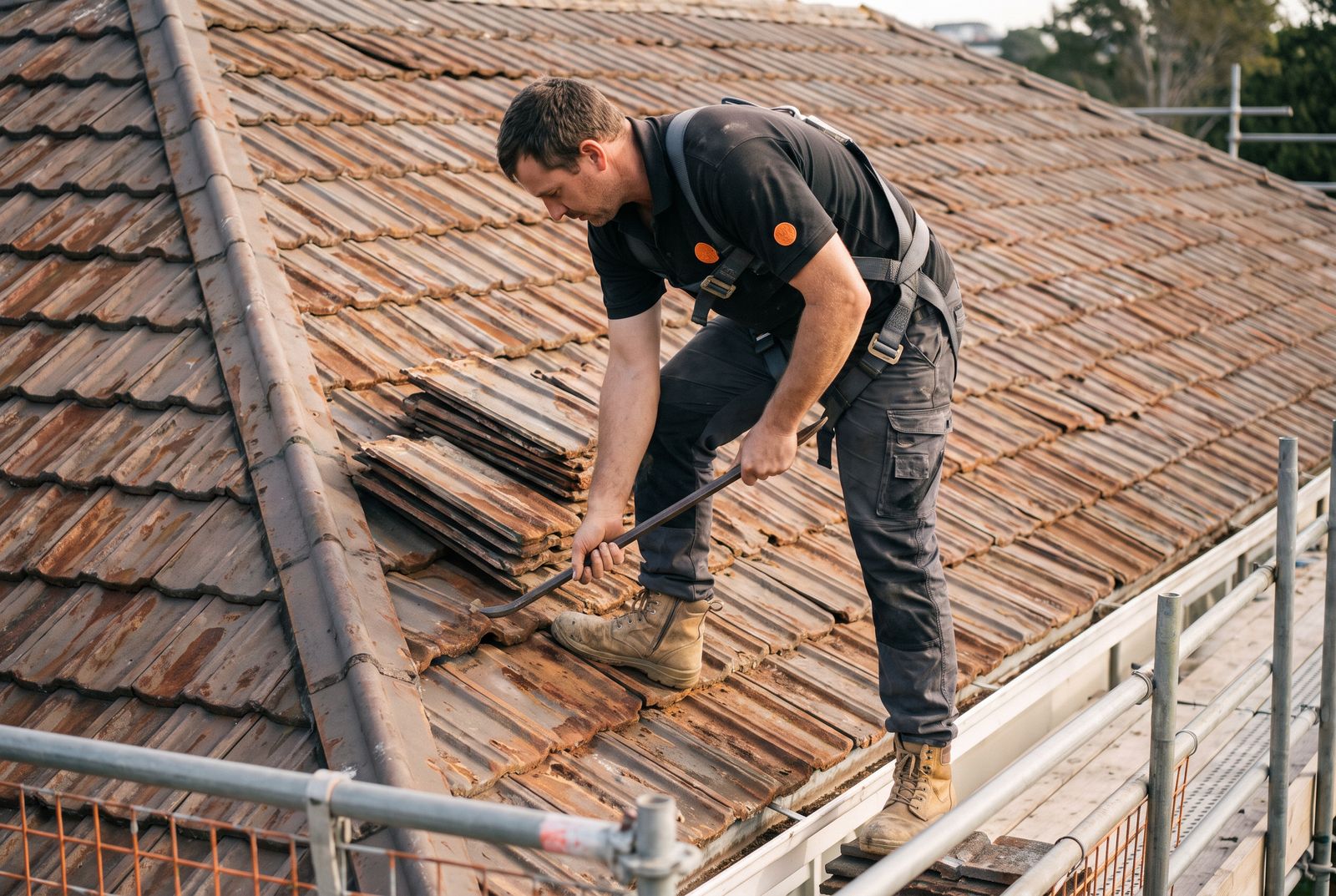
Signs your decramastic roof is failing
Decramastic roofs tend to fail gradually and then quickly. In Wellington, chip loss often starts on the faces that take the most wind and rain and spreads from there. Once the steel is exposed it has little protection left, and leaks follow at tile overlaps, nail holes and valleys. Small tiles held by nails also give wind plenty of edges to work at, so lifted or rattling tiles after a gale are a common early sign.
- Heaps of stone chip in the spouting or at the bottom of downpipes
- Bare, black or rust-coloured patches where chip used to be
- Tiles that have lifted, rattle in the wind or have popped their nails
- Cracked or dented tiles from being walked on
- Rust spots on the underside, visible from the roof space
- Leaks at valleys, ridges and around flues
Why repairs and painting rarely last
Individual decramastic tiles can be replaced, and we do tile repairs where one area is damaged and the rest is sound. On an aged roof, though, patching chases a problem that is happening everywhere at once, and matching old tiles is difficult.
Painting is often offered as a cheaper fix. The catch is preparation. WorkSafe has issued a safety alert that high-pressure water spraying, including water blasting, must not be used on asbestos or asbestos-containing material, and that decramastic roofs installed before asbestos was phased out should be checked first. Painting an untested roof after water blasting can contaminate your property. To compare options, read our roof replacement guide.
How It Works
Decramastic roof: repair or replace?
If most tiles still hold their chip and rust is limited to one area, a decramastic roof repair can make sense: we replace the damaged tiles and refix the ridges and flashings. If chip loss and rust run across the whole roof, replacing it is usually the better value, and we tell you which applies after the inspection.
Asbestos testing comes first
Before we quote to remove a decramastic roof, we arrange for a tile sample to be tested by an independent laboratory. If the result is clear, the tiles come off as part of a normal re-roof. If asbestos is present, removal follows WorkSafe rules: more than 10 square metres of asbestos-containing material must be removed by a licensed removalist, who must notify WorkSafe in writing at least five days before starting.
WorkSafe publishes specific guidance for removing metal cladding lined with asbestos-containing bitumen, including polythene sheeting, low-pressure wetting and sealed waste bags. In Wellington the removal is also planned around the wind, so sheeting and waste stay under control, and the waste goes to an approved disposal site.
Replacing decramastic with COLORSTEEL
Once the tiles are off, the job becomes a standard steel re-roof with one difference: decramastic is fixed to battens, and longrun steel needs purlins at a different spacing. We remove the battens, check the rafters, fix new purlins and screws to suit your NZS 3604 wind zone, lay new underlay and install the new roof with fresh flashings and ridging. The full sequence is on our re-roofing page.
Because decramastic is already a lightweight roof, the change in load is small, unlike a conversion from concrete tiles. Corrugate and trapezoidal profiles are the usual choices, and the COLORSTEEL colours page shows the range.
What affects the cost
The biggest variable is the asbestos test result. A clear result means a straightforward strip and re-roof. A positive result adds licensed removal, notification and disposal. After that, price depends on roof area, pitch, hips and valleys, access, timber replacement and the steel your site needs.
Exposure matters. Land within 500 m of the sea, including the harbour, is exposure Zone D under NZS 3604, so homes near the water in places such as Eastbourne, Seatoun, Paremata or Raumati may need a more durable steel product than an inland valley site. We check your address on BRANZ Maps. Hillside homes with steep access also take longer to strip and supply. Your quote shows removal and roofing as separate lines, and our page for roofers on the Kāpiti Coast has local detail.
Why Choose Cheeky's Roofers for Decramastic Roof
No water blasting
We never water blast or pressure clean a decramastic roof before it has been tested.
Tested before quoted
We get a lab result first so your quote reflects how the tiles must legally be removed.
Purlins for your wind zone
Old battens come off and purlins go on at the spacing and fixing your steel and wind zone need.
Chip-free spouting
We clear years of shed chip from the spouting and downpipes as part of the job.
Decramastic Roof FAQs
Does all decramastic contain asbestos?
No, but some older decramastic has tested positive, and you cannot tell by looking. A lab test is the only way to know.
Can I paint my decramastic roof?
Painting can extend life on a sound roof, but preparation must not involve water blasting unless the tiles have tested clear of asbestos. On a roof losing chip and rusting, painting rarely lasts.
Why is there grit in my spouting?
That is stone chip coming off the tiles. Once the chip goes, the coating and steel underneath are exposed and wear faster.
Some tiles lifted in the last gale. Can they just be renailed?
Sometimes, as a short-term repair. If tiles are lifting across the roof, the nails and battens are usually tired, and replacement is the lasting answer.
Is a new steel roof heavier than decramastic?
Both are lightweight roofs, so the load on the frame changes very little.
How long does a decramastic replacement take?
Similar to a standard re-roof once removal is done. If asbestos is present, allow extra time for testing and the five-day notification before licensed removal.
Decramastic Roof Across Wellington
We cover every region: Central Wellington, the Eastern and Southern Suburbs, the Western and Northern Suburbs, the Hutt Valley, Porirua, the Kāpiti Coast.
Related Roofing Services
See the roof replacement cost guide or every service we offer.
Sources and further reading
- WorkSafe: Check for asbestos before high-pressure spraying on roofs (safety alert)
- WorkSafe: Removing metal cladding lined with asbestos-containing bitumen
- WorkSafe: Asbestos licensing overview
- WorkSafe: Duty to notify licensed asbestos removal
- Gerard Roofs: What are decramastic roof tiles?
- BRANZ Maps: wind and corrosion zones
- COLORSTEEL: products by environment category
- NZ Metal Roof and Wall Cladding Code of Practice