
A roof leak is the one roofing problem that cannot wait. Water in the ceiling soaks insulation, stains linings, rots timber and can reach light fittings. The sooner the source is found and sealed, the less damage there is to fix inside.
Leaks are also the roofing job most often done badly. Water travels along purlins, rafters and underlay before it drips, so the stain can be a metre or more from where it gets in, and in Wellington wind can drive rain into places it would never reach on a still day. We find the entry point first, then fix it. For non-urgent problems, see our roof repairs page.
Pricing: every roof gets a free on-site measure and an itemised written quote, with a fixed price agreed before any work starts.
Damage you can see but no leak yet, such as loose sheets or cracked tiles? That is covered under roof repairs.
What to do right now if your roof is leaking
Do not go up on the roof yourself, especially in wet or windy weather. Roofs are slippery, a gust can knock you off balance, and WorkSafe's guidance on working at height exists because falls from roofs cause serious injuries. Inside the house you can limit the damage safely.
- Put a bucket under the drip, with a towel inside to stop splashing
- If the ceiling is bulging with water, keep clear and turn off power to that area at the switchboard
- Move furniture, electronics and rugs away from the leak
- Take photos of the stain and any damage for your insurer
- Check whether spouting near the leak is overflowing, a common cause
- Call us with your address and where the leak is showing
Wind-driven rain and where Wellington leaks start
Most leaks come from the details rather than the middle of a sheet. Flashings are the most common culprit: where the roof meets a wall, chimney, skylight or another roof plane, the joint relies on a correctly shaped and lapped flashing, and those wear, lift or were sometimes never right. Penetrations for flues, vents and pipes come next, where sealing boots perish in the sun.
Wellington adds wind. Rain pushed sideways by a strong northerly or southerly can travel up under flashings, laps and ridges that shed ordinary rain without trouble, which is why some leaks only show in one wind direction. Loose fixings, corroded laps, cracked tiles, blocked valleys and overflowing spouting complete the usual list. Our roof flashing repairs page explains those details further.
How It Works
Heavy rain, spouting and hillside sections
Rainfall varies widely across the region. NIWA's 1981 to 2010 normals put Wellington Airport at about 957 mm a year, Lower Hutt around 1,206 mm and Wainuiomata Reservoir about 1,800 mm, with winter the wettest season. Spouting and valleys that cope in an average week can overflow in a downpour, sending water back under the roof edge or into the eaves, where it looks like a roof leak inside.
On hillside sections, where that water ends up matters too. GeoNet linked many of the slips after Wellington's very wet July 2022 to saturated ground, and water from an overflowing gutter or a broken downpipe pouring onto a bank adds to the problem. Fixing the spouting is part of fixing the leak. See our spouting page for options.
Leak or condensation?
Not every wet ceiling is a leak. Condensation forms on the underside of roofing when warm, moist air from the house meets a cold roof, and it can drip in a way that looks very like a leak. Signs include drips on cold, clear mornings rather than during rain, dampness spread across the roof space and mould on timber or the underside of the roofing.
Condensation is solved with underlay, ventilation and keeping moisture from bathrooms, kitchens and dryers out of the ceiling. If that is what we find, our roof ventilation page covers the options.
How we trace and fix a leak
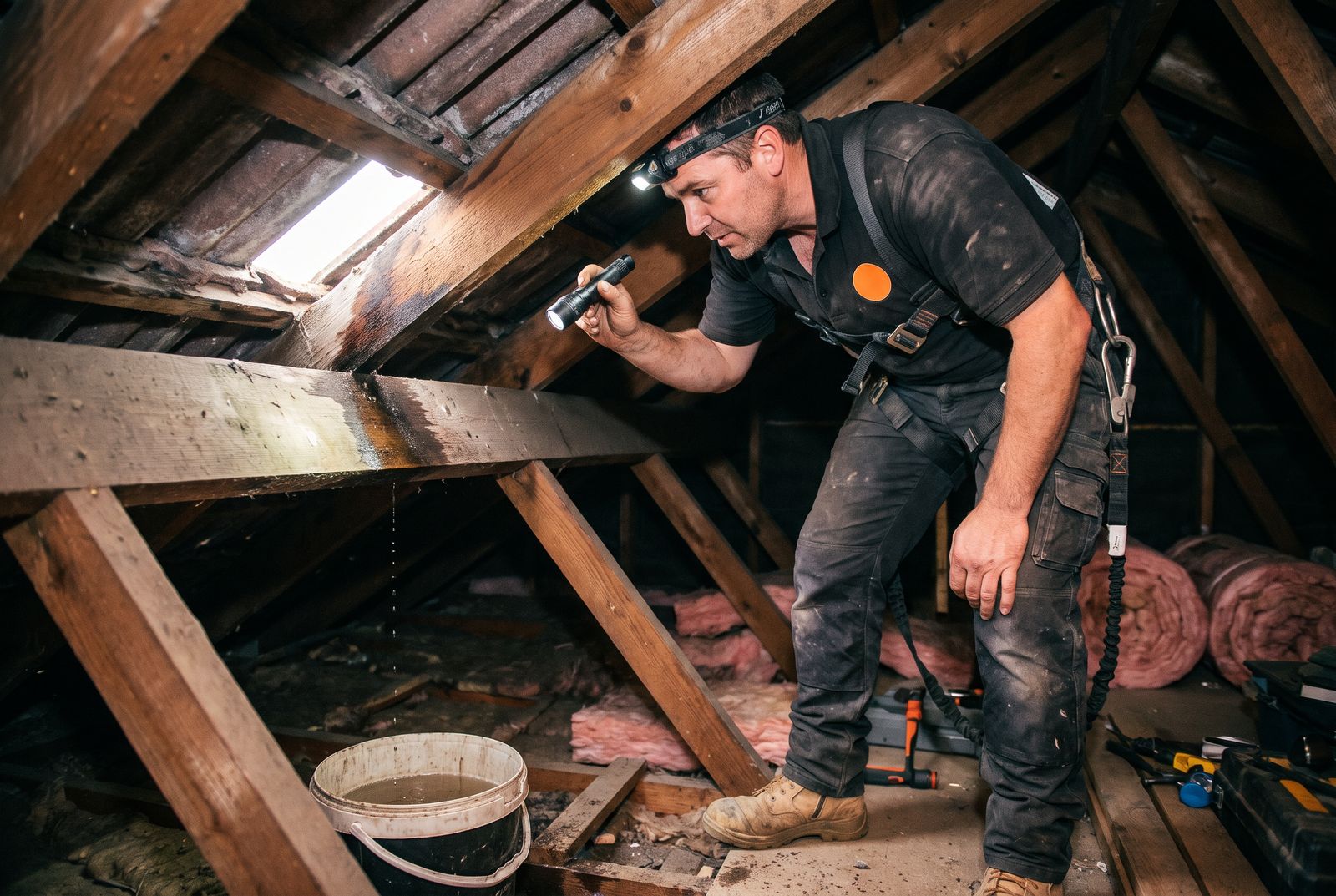
We start in the roof space where it is safe to do so, following water marks on timber and underlay back towards the source. On the roof we check every likely entry point above and uphill of the stain, and on the windward side, not just directly above it. Where the source is not obvious, we may water test sections of the roof in a controlled way to confirm it.
If wind or rain means a permanent repair cannot be done straight away, we make the roof safe first, then come back to finish properly. The permanent fix uses materials matched to your roof and fixings suited to your wind zone, and you get photos of the cause and the repair. If several leaks keep returning, the roof may be near the end of its life; our roof replacement guide covers that decision. For local detail, see roofers in the Hutt Valley.
Why Choose Cheeky's Roofers for Roof Leak Repairs
Source first
We follow the water back to where it gets in before fixing anything, so the repair holds.
Made safe, then fixed
If the weather will not allow a permanent repair, we secure the roof first and return to finish.
Photos for you and your insurer
You get photos of the cause and the fix, useful if you are claiming for internal damage.
No upselling
A leak is not a reason to sell you a new roof. We only recommend replacement when the evidence supports it.
Roof Leak Repairs FAQs
How quickly can you come out for a leak?
Active leaks come before planned work. Call us and we will give you a time based on the weather and how much water is coming in.
Why is the stain not where the leak is?
Water runs along purlins, rafters and underlay before dripping, so the entry point is usually uphill of the stain and sometimes well away from it.
My roof only leaks in a southerly. Why?
Wind-driven rain can push water under flashings, laps and ridges on one face that shed normal rain fine. These leaks need the detail fixed, not just sealant.
Will my insurance cover a roof leak?
That depends on your policy. Many policies treat sudden storm damage differently from gradual wear. Our photos and report help your insurer assess the claim.
Can you fix a leak in the rain?
We can usually make it safe in the rain, but permanent repairs need dry and reasonably calm conditions to be done properly.
Could it be condensation instead?
Yes. Drips on cold, dry mornings and widespread dampness in the roof space point to condensation, which needs a different fix.
Roof Leak Repairs Across Wellington
We cover every region: Central Wellington, the Eastern and Southern Suburbs, the Western and Northern Suburbs, the Hutt Valley, Porirua, the Kāpiti Coast.
Related Roofing Services
Roof Leak Repairs Guides
- Why Does My Roof Only Leak in a Southerly? Wind-Driven Rain Explained
- Roof Rattling in the Wind? Replacing Roof Nails With Screws
See the roof replacement cost guide or every service we offer.