
A new roof on a new build or extension is one of the parts of the project you least want to get wrong. In Wellington the roof has to be fixed to suit the site's wind zone, the steel and fasteners have to suit its distance from the sea, and the whole job has to be documented so your Code Compliance Certificate is not held up at the end.
We install new roofs for owners, builders and designers across the region, working from consented plans. Most are longrun steel, and we also lay membrane roofing on low-pitch areas and decks and fit skylights while the roof is open. If you are replacing an existing roof rather than building new, our re-roofing page is the better starting point.
Pricing: every roof gets a free on-site measure and an itemised written quote, with a fixed price agreed before any work starts.
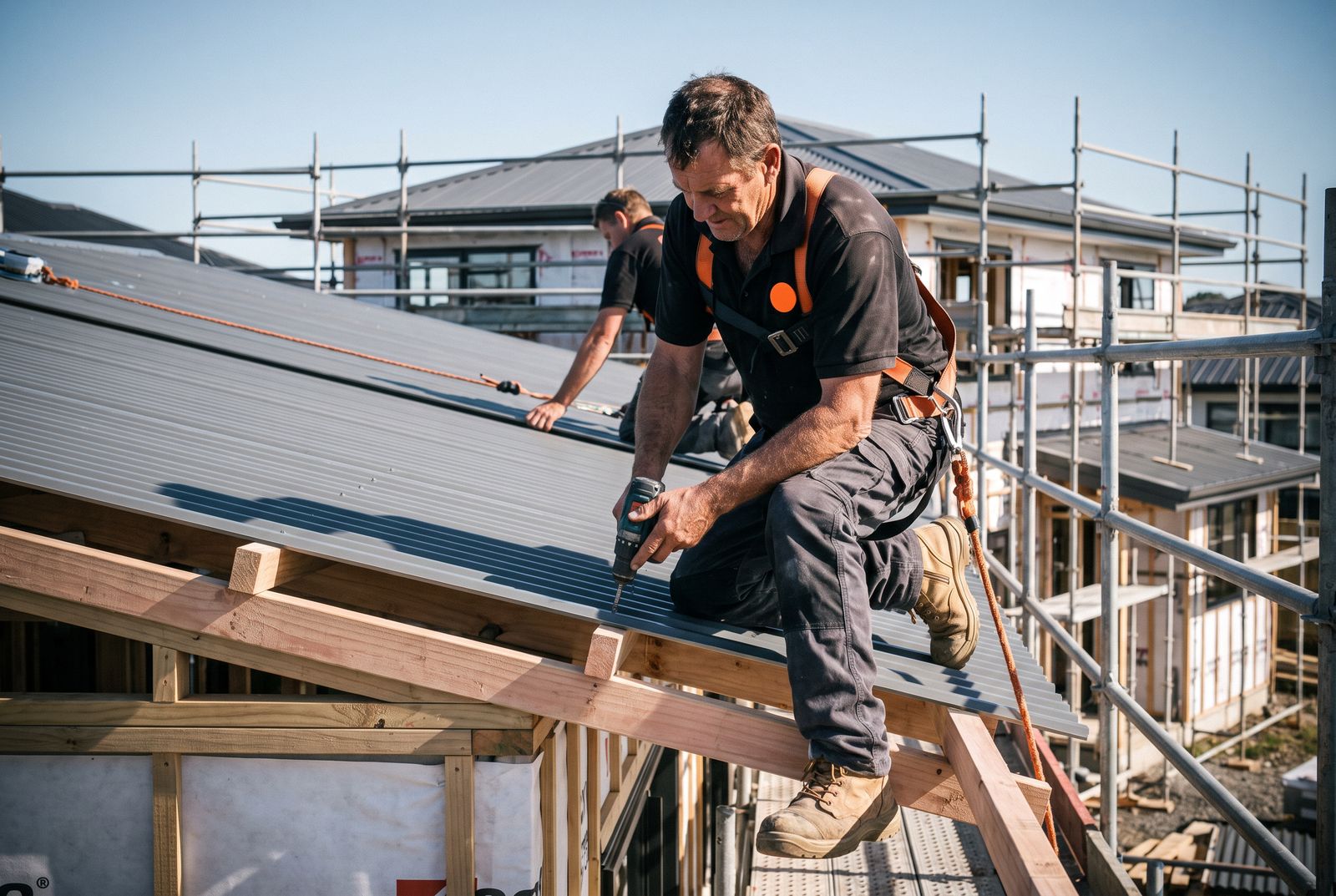
What we install
A new roof is more than the sheets on top. Depending on the plans, the scope can include underlay, purlins or battens set out for the cladding, flashings, spouting and downpipes, and any skylights or roof windows. We confirm the scope against the plans and specification at quote stage, so nothing falls between trades.
- Longrun COLORSTEEL in corrugate and trapezoidal profiles
- Membrane roofs for low-pitch areas, decks and internal gutters
- Roof underlay and safety mesh to the specification
- Flashings folded to the consented details
- Spouting, downpipes and rainheads
- Skylights and roof windows with manufacturer flashing kits
Designing a roof for Wellington wind
NZS 3604 sorts building sites into wind zones by maximum design wind speed, from Low at 32 metres per second through Medium, High, Very High and Extra High at 55 metres per second, with sites above that needing specific design. The zone shapes the structure under the roof as well as the cladding: purlin and batten fixings, the number and spacing of roof fasteners and the flashing details all follow from it.
Wellington City Council publishes wind zone mapping for its urban areas, and BRANZ Maps gives an indicative zone by address, but the zone that counts is the one on your consented plans. As one example, a LIM for a property in Tawa records a Very High wind zone. Hilltops, ridges and the shoulders of hills can sit in a higher zone than a sheltered gully nearby. We build our quote around the zone and details on your plans, and we raise it early if something in the specification does not suit the site.
How It Works
Choosing roofing for the site
The roofing material is chosen by pitch, run length, exposure and the look you want. Corrugate suits steeper roofs and traditional styles, while trapezoidal profiles can run at lower pitches. Near the coast the steel product matters more than anywhere else. Under NZS 3604, sites within 500 metres of the sea, harbours included, are generally Exposure Zone D, and much of Wellington's harbourside and south coast housing is likely to fall in that band, though it should be confirmed for each address. Our COLORSTEEL and longrun roofing page explains how profile and product are matched to a site, and what the manufacturer's environment categories mean for warranty.
Consent, licensing and your Code Compliance Certificate
Roofing on a house under building consent is restricted building work, because it is part of how the building keeps water out. It must be carried out or supervised by a Licensed Building Practitioner holding a suitable licence class. When the roof is finished, that practitioner gives a record of work to you and the council. It is worth asking whoever does your roof for their LBP number before work starts.
Your council issues the Code Compliance Certificate once it is satisfied the work matches the consent. Wellington City, Hutt City, Upper Hutt City, Porirua City and Kāpiti Coast District each run their own consent process. Councils have 20 working days to decide on a Code Compliance Certificate application, and that clock stops while they wait for information, so missing roofing paperwork can delay the whole project. We supply the record of work, product information and photos your builder needs for the file.
Working with your builder on a hillside site
On a new build we fit into the builder's programme. The roof usually goes on once the frame and trusses or rafters are up and braced, so the building can be closed in. We need the roof framing ready, safe access to the roof edge, and a place to land long sheets.
Long sheets are where Wellington hillside sites get interesting. Hillside sections in suburbs like Brooklyn, Ngaio, Khandallah and Wainuiomata can have steep driveways or no vehicle access to the build platform, and council notes that the city's topography often pushes car decks and steps into the road reserve. Getting a 10 metre sheet from the truck to the roof may mean craning, hand carrying in sections, or splitting the run with a lap. We plan it with the builder before the steel is ordered, not on delivery day.
Rain, spouting and the rest of the roof
A new roof needs rainwater goods that can cope with local rain. NIWA rainfall normals range from about 957 mm a year at Wellington Airport to about 1,800 mm at the Wainuiomata reservoir, with much of the region between 1,000 and 1,200 mm. The Building Code's surface water clause E1 sizes spouting and downpipes from the roof area and rainfall intensity, and on hillside sections the downpipes must discharge where the plans say, not onto a bank. Our spouting page covers sizing in more detail, and our Hutt Valley roofers page covers the wetter valley suburbs.
Why Choose Cheeky's Roofers for New Roofs
Quoted from your plans
We price from the consented drawings and specification, and flag anything that does not suit the site before work starts.
Wind zone built in
Fixings, fastener spacing and flashings follow the wind zone on your consent, not a generic detail.
Paperwork ready for sign-off
Record of work, product details and photos are supplied for your Code Compliance Certificate file.
Access planned early
On hillside sites we sort sheet delivery and lifting with your builder before the steel is ordered.
New Roofs FAQs
Can you quote from plans before the frame is up?
Yes. We quote from the consented plans and specification, then measure on site once the framing is complete before ordering steel.
How do I find my site's wind zone?
It should be on your consented plans. Wellington City Council publishes wind zone mapping and BRANZ Maps gives an indicative zone, but the zone on your consent is the one the roof is built to.
What is restricted building work?
Work on the structure or weathertightness of a house that needs building consent. Roofing is included, so it must be done or supervised by a Licensed Building Practitioner, who provides a record of work.
Which COLORSTEEL product do I need near the coast?
It depends on your distance from the sea and the exposure of the site. Sites within 500 metres of the sea or harbour are generally Zone D, and the manufacturer's environment categories set what product the warranty supports.
Can you do the spouting too?
Yes. Spouting, downpipes and rainheads can be included in the roofing quote so one team is responsible for getting water off the roof.
Do you work with owner-builders?
Yes. We work from consented plans and can explain what the roofing part of the project needs for inspections and sign-off.
New Roofs Across Wellington
We cover every region: Central Wellington, the Eastern and Southern Suburbs, the Western and Northern Suburbs, the Hutt Valley, Porirua, the Kāpiti Coast.
Related Roofing Services
See the roof replacement cost guide or every service we offer.
Sources and further reading
- MBIE building.govt.nz: Restricted building work
- MBIE building.govt.nz: LBP licence classes
- Level (BRANZ): Wind zones
- Wellington City Council: NZS 3604 wind zones dataset
- BRANZ Maps: corrosion and wind zones
- NIWA: The Climate and Weather of Wellington (2014)
- Wellington City Council: Building and resource consents
- Hutt City Council: Building consents
- Wellington City Council: Build a retaining wall (topography and road reserve)