
Repainting a sound roof can buy it years and smarten up the whole house. Repainting a tired one badly can peel within a couple of winters and hide rust that keeps eating away underneath. The gap between the two is mostly preparation: washing off chalk and dirt, killing moss and lichen, treating rust, replacing failed fixings and priming bare metal before any colour goes on.
We paint pre-painted steel, galvanised iron and concrete tile roofs across the Wellington region. Before quoting we check whether the roof is worth painting at all. If the steel is rusted through, or the roof leaks from many points, paint will not save it, and we will tell you a re-roofing quote is the better use of your money.
Pricing: every roof gets a free on-site measure and an itemised written quote, with a fixed price agreed before any work starts.
Paint still sound and only moss and grime to remove? See roof cleaning.
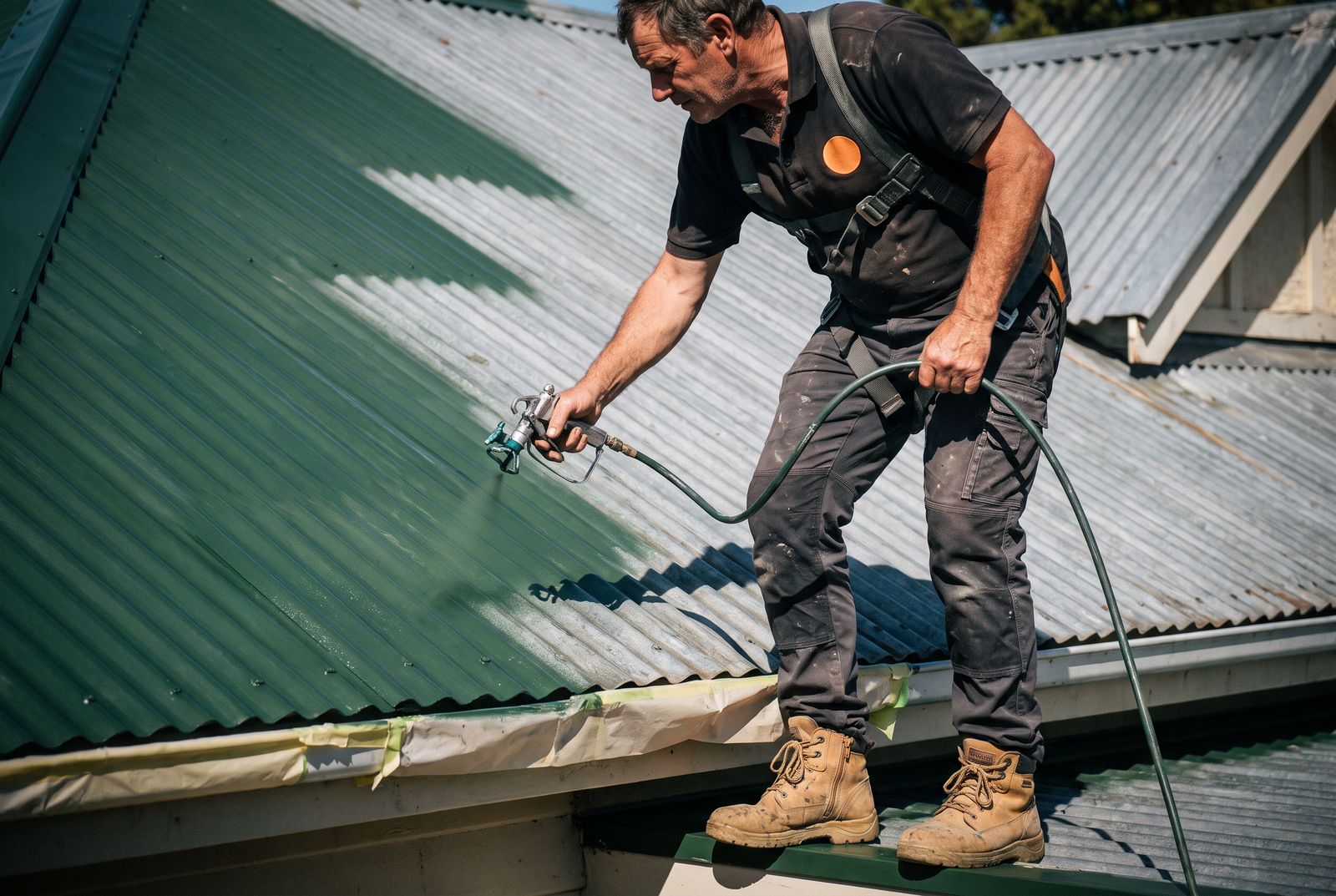
Signs a roof is ready for repainting
These signs usually mean the coating is wearing out while the roof underneath may still have life in it:
- Chalking: a powdery film that comes off on your hand when you wipe the roof
- Faded or patchy colour, often worst on the planes that face the sun
- White corrosion on galvanised or Zincalume steel, or light rust at laps and screw heads
- Moss and lichen on concrete tiles, with a rough, porous surface underneath
- Flaking or peeling from an earlier repaint
Preparation decides how long it lasts
Paint makers are clear that the system matters as much as the topcoat. Resene's roof painting guidance describes a typical system as a roof wash, a primer coat and two topcoats, and says the substrate should be primed for the best protection. For older, faded steel it advises washing off chalking, scrubbing away white rust and spot priming affected areas before topcoating. New pre-painted steel should be lightly sanded or left to weather before it is painted.
On concrete tiles the moss and mould have to be killed first. Resene's Moss and Mould Killer data sheet calls for it to be diluted and left for up to 48 hours before washing off, with a repeat for heavy growth. We also replace cracked tiles, rebed or repoint ridges, and replace loose or rusted roofing screws before any paint goes on. If you only want the clean and moss treatment for now, our roof cleaning service covers that on its own.
How It Works
Wind, rain and salt: painting in Wellington
Weather is the biggest scheduling challenge here. NIWA's climate summary for Wellington records gusts over 63 km/h at the airport on about 166 days a year, and winter is the wettest season across the region. Paint labels set minimum temperatures and warn against applying to damp surfaces, and each coat needs dry weather to cure. Wind also carries spray and dust, so we plan around the forecast, protect cars and neighbouring properties, and would rather move a date than paint onto a wet or windy roof.
Salt is the other factor. BRANZ places homes within 500 metres of the sea, including harbours, in its high corrosion zone, which takes in much of the harbour edge and south coast from Petone and Eastbourne to Lyall Bay and Island Bay, plus Tītahi Bay and the Kāpiti beachfront. Those roofs chalk and corrode faster, so the preparation is heavier and regular washing after painting helps the new coating last. You can check your own address on BRANZ Maps.
Paint systems and colour
Roof paint is a specialist coating chosen for the surface. Steel needs a primer that bonds to exposed galvanised or Zincalume areas, then a roof topcoat. Concrete tiles need a system made for cement-based surfaces. If you collect drinking water from the roof, the system must be suitable for tank water, and the downpipes should stay disconnected until the paint has cured and the first heavy rain has washed the roof.
Dark colours absorb more heat, which stresses the coating and warms the roof space. Some makers offer heat-reflective versions of dark shades, such as Resene's CoolColour range. If your home is in a Wellington City Council character precinct, it is worth checking the District Plan before a big colour change. Our COLORSTEEL colours guide shows how common roof colours read on real houses.
Older roofs and asbestos
Some older roofing contains asbestos, including fibre cement sheet such as Super Six, some cement tiles and some decramastic roofing laid before asbestos was phased out. WorkSafe New Zealand states that high-pressure water blasting must not be used to clean roofing that contains asbestos. If your roof could contain it, we arrange testing before quoting and use low-pressure soft-wash methods only, or recommend replacement where painting is not appropriate. Our asbestos roof replacement page explains that route.
What affects the cost of roof painting
Roof painting is quoted on area, but condition sets the price. Your itemised quote covers roof area and pitch, rust treatment and spot priming, tile or sheet repairs, replacement fixings, moss treatment, the paint system and colour, edge protection or scaffolding, and protection from overspray. On steep hillside sections with limited access, getting gear and scaffolding to the house can add time. A roof in poor shape costs more to prepare, which is part of why we check whether painting is worth doing first.
Why Choose Cheeky's Roofers for Roof Painting
Paint or replace, straight answer
If a roof is past painting we say so, with photos that show why.
Preparation itemised
Washing, moss treatment, rust treatment, priming and repairs are listed separately so quotes can be compared.
Asbestos-aware methods
Suspect roofs are tested first and never water blasted at high pressure.
Wind and weather discipline
We paint only when the roof is dry and calm enough for the coating, even if that moves the date.
Roof Painting FAQs
How long does a roof repaint last?
It depends on the roof, the preparation, the paint system and the exposure. Preparation and priming make the biggest difference, and coastal roofs need more care. We give you the maker's information for the system we use.
Can you paint a COLORSTEEL roof?
Yes, once the original coating has weathered. Check with the manufacturer whether painting affects any remaining material warranty before deciding.
Can concrete tiles be painted?
Yes. They need moss treatment, a thorough clean, repairs to cracked tiles and ridges, and a paint system made for cement-based surfaces.
What time of year is best for roof painting in Wellington?
Drier, calmer months are easiest because the coating needs dry conditions to cure. We work to the forecast rather than the calendar and will reschedule if wind or rain moves in.
Will painting stop my roof leaking?
Generally not. Leaks come from flashings, fixings, laps and penetrations. We fix those during preparation, but paint by itself is not a leak repair.
Can I collect drinking water from a painted roof?
Only if the paint system is suitable for tank water. Keep the downpipes disconnected until the paint has cured and rain has washed the roof.
Roof Painting by Area
Local roof painting information for your part of Wellington:
Related Roofing Services
Roof Painting Guides
See the roof replacement cost guide or every service we offer.
Sources and further reading
- Resene: Painting roofs
- Resene: Roof painting technical advice
- Resene: Moss and Mould Killer data sheet
- WorkSafe: High-pressure water blasting should not be used to clean roofing containing asbestos
- WorkSafe: Roof restoration and maintenance
- NIWA: The Climate and Weather of Wellington
- BRANZ: Metal corrosion zones