
Wellington storms can lift roofing sheets, peel back flashings, break tiles, bring down branches and overwhelm spouting in a few hours. When that happens you need two things: the roof made safe so no more water gets in, and a clear record of the damage so your insurance claim goes smoothly.
We handle both. The first visit secures the roof and records what happened. The permanent repair follows, scoped to what your insurer approves. If water is already coming through the ceiling, read what to do right now on our roof leak repairs page, then call us.
Pricing: every roof gets a free on-site measure and an itemised written quote, with a fixed price agreed before any work starts.
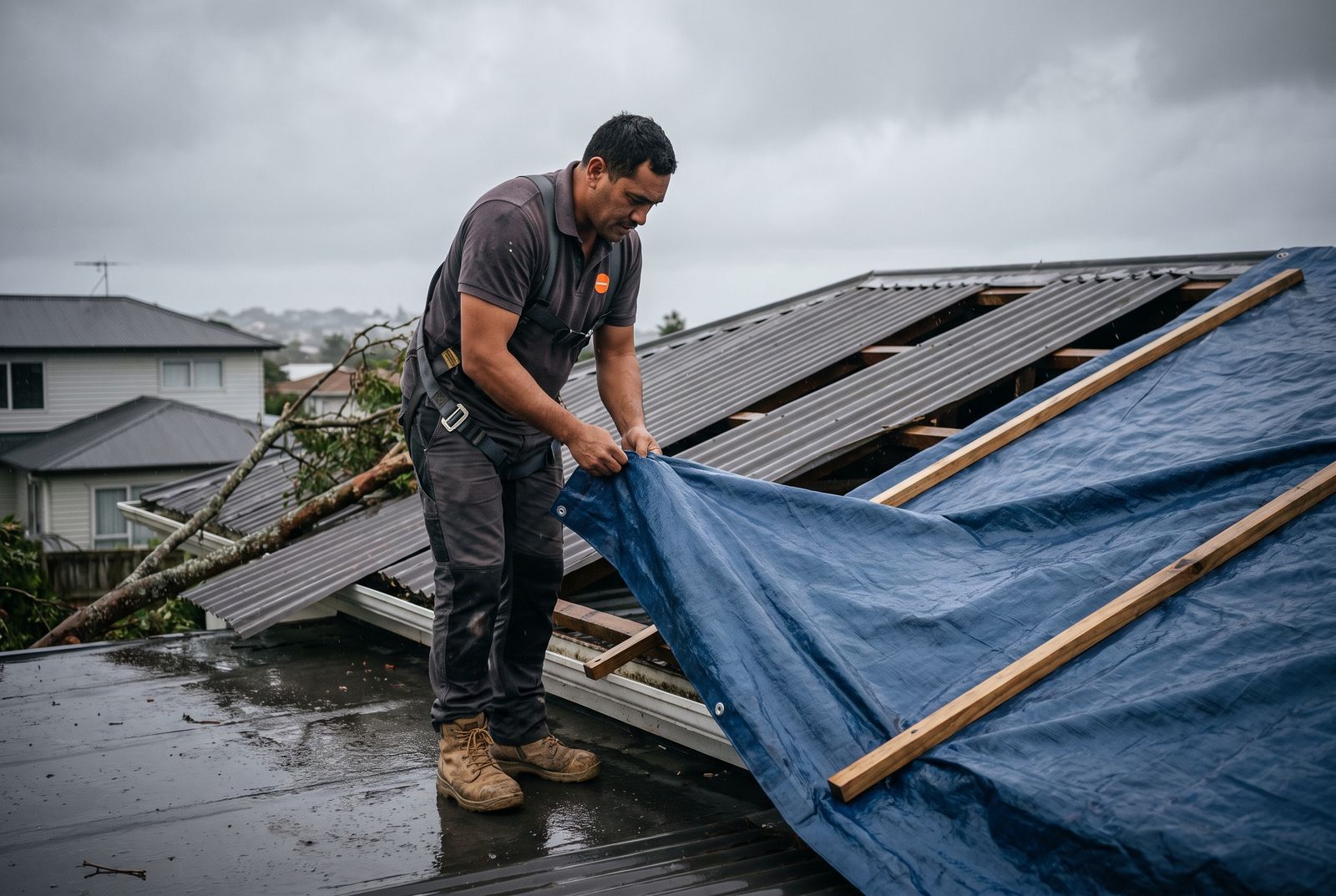
What Wellington storms do to roofs
Wellington's wind records are hard to match. NIWA lists gusts of 198 km/h at Kelburn and 187 km/h at Wellington Airport in the Wahine storm of 10 April 1968, and 248 km/h on Hawkins Hill, the highest gust recorded in the North Island. Gales can come in any month, though they are most frequent in winter.
Wind does most of the damage. Once air gets under a sheet edge, a ridge cap or a barge flashing, each gust lifts and bends it further. Heavy rain then finds every weakness the wind has opened, and spouting that cannot cope sends water back under the roof edge.
- Roofing sheets lifted, bent or torn at the edges and ends
- Ridge caps, barge and apron flashings loosened or blown off
- Concrete or decramastic tiles cracked, lifted or blown off
- Branches or flying debris puncturing sheets or breaking tiles
- Spouting pulled away from the fascia or overflowing
- Skylights and flue flashings dislodged
Make it safe first
After a storm the priority is stopping more water getting in and stopping loose material becoming a hazard. A loose roofing sheet in a Wellington gale is dangerous to anyone nearby, so please do not climb up to deal with it yourself. WorkSafe guidance is clear that work on roofs needs proper controls against falls, and storm conditions make any roof more dangerous.
Our make-safe visit refixes or removes loose material, covers open areas and clears blockages that are sending water inside. Where a full repair has to wait for the wind to drop or for materials, the temporary measures are designed to hold until we return. If the roof is fibre cement, broken pieces are treated as possible asbestos; see asbestos roof replacement.
How It Works
Documenting damage for your insurer
Insurers need evidence that damage came from a sudden event rather than gradual wear. On every storm job we take dated photos of the damage and the surrounding roof, note what failed and why, and record the make-safe work. We then provide a written report and a repair quote you can send to your insurer or their assessor, and we keep the make-safe in place if they want to inspect first. Our roof inspections page explains what a full condition report includes.
It helps to know who covers what. Since 1 July 2024 the Natural Hazards Commission Toka Tū Ake (formerly EQC) has provided natural hazard cover under the Natural Hazards Insurance Act 2023, and its storm and flood cover applies to land only. Storm damage to the roof itself is a matter for your home insurer and your policy.
One honest note: if a roof was already badly corroded or poorly fixed before the storm, the report will say so. An accurate report protects you better than one that overstates the storm's role.
Permanent repairs fixed for your wind zone
The repair puts the roof back to a sound, weathertight condition: new sheets rolled to length and matched to your COLORSTEEL colour, new flashings, replacement tiles, new spouting brackets or spouting. NZS 3604 wind zones run from Low to Extra High, with the most exposed sites needing specific design, and many Wellington houses sit in the High, Very High or Extra High zones. Where the storm shows the original fixings were not adequate for the site, we recommend upgrading them rather than putting back what failed.
Sometimes storm damage tips the balance on an older roof. If the damaged area is large and the rest of the roof is near the end of its life, your insurer may contribute to the damaged section while you choose to replace the whole roof. Our roof replacement guide helps with that decision.
Preparing your roof before the next storm
Many storm repairs would have been smaller with some maintenance beforehand. Clear spouting and valleys before winter, trim branches that overhang the roof, and have loose fixings and lifted flashings sorted while they are small. Exposed hilltop and coastal homes benefit most. Your wind zone is usually shown on consented plans or a LIM, and it decides how the roof should be fixed.
On hillside sections, make sure downpipes discharge to the stormwater system rather than onto a bank, because saturated ground was linked to many of the slips after Wellington's wet winter of 2022. If spouting is the weak point, our spouting page covers replacement. For local detail, see roofers in the Eastern and Southern Suburbs.
Why Choose Cheeky's Roofers for Emergency Roof Repairs
Make-safe and repair from one team
The people who secure your roof also do the permanent repair, so nothing is lost between visits.
Insurer-ready reports
Dated photos, a clear description of the cause and an itemised repair quote, ready to send to your insurer.
Accurate, not inflated
Our reports describe the damage honestly, including any pre-existing wear, which keeps claims credible.
Fixed for your wind zone
Repairs use fixings and patterns suited to your site's wind zone, not just what was there before.
Emergency Roof Repairs FAQs
Should I call my insurer or a roofer first?
If water is coming in, get the roof made safe first, as most policies expect you to prevent further damage. Then contact your insurer. Our photos and report support the claim.
Does the Natural Hazards Commission cover storm damage to my roof?
Its storm and flood cover applies to land only. Wind or rain damage to the roof is claimed through your home insurance policy.
Will insurance pay for my roof repair?
That depends on your policy and on whether the damage came from a sudden event rather than gradual wear. Your insurer decides, and our report gives them the evidence.
How quickly can you come after a storm?
After a major storm demand is high, so we prioritise homes with water coming inside. Call early and give us as much detail as possible.
Can you work on the roof while it is still windy?
Only when it is safe. Make-safe work can sometimes go ahead in moderate wind, but permanent repairs wait for calmer conditions.
Is it safe to stay in the house?
Usually yes. If a ceiling is sagging with water, keep clear of that area and turn off power to it until it is checked.
Emergency Roof Repairs Across Wellington
We cover every region: Central Wellington, the Eastern and Southern Suburbs, the Western and Northern Suburbs, the Hutt Valley, Porirua, the Kāpiti Coast.
Related Roofing Services
Emergency Roof Repairs Guides
See the roof replacement cost guide or every service we offer.
Sources and further reading
- NIWA: The Climate and Weather of Wellington
- Natural Hazards Commission Toka Tū Ake: Land cover factsheet
- WorkSafe: Working safely on roofs
- BRANZ: Wind zones and NZS 3604
- GeoNet: Wellington slips after the wet winter of 2022
- NZ Metal Roof and Wall Cladding Code of Practice
- MBIE building.govt.nz: Exemption 1, general repair, maintenance and replacement