
Where a roof is too flat for steel, or a deck sits over living space, a membrane does the waterproofing. Butynol, TPO and torch-on systems all form a continuous sheet with sealed laps, and when they are laid on the right substrate with enough fall they work well. When they fail, water usually travels a long way under the membrane before it shows up inside.
We replace and repair membrane roofs, decks, box gutters and parapet roofs across the region, from apartment and townhouse roofs in Te Aro and Thorndon to flat-roofed extensions and decks in the suburbs. Membrane work often sits next to steel, so we also handle the junctions between the two. For pitched areas, see our COLORSTEEL and longrun roofing page.
Pricing: every roof gets a free on-site measure and an itemised written quote, with a fixed price agreed before any work starts.
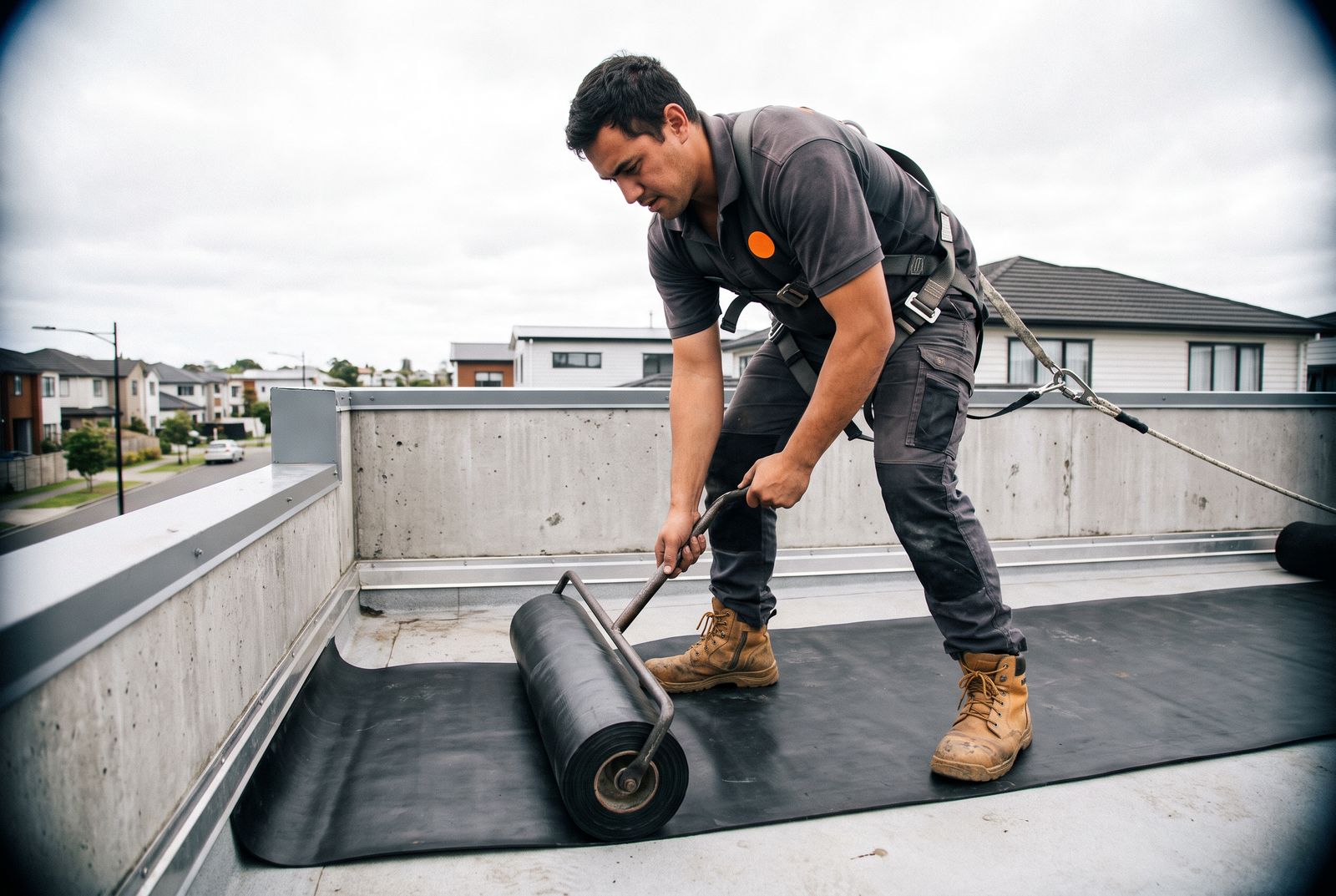
Signs your membrane roof or deck is failing
Membranes rarely fail all at once. Most give a few warnings first, and catching them early can be the difference between a repair and a full replacement with new substrate.
- Water ponding that is still there a day or two after rain
- Blisters, bubbles or soft spots underfoot
- Laps or seams lifting at the edges
- Cracking or crazing on the surface of older membranes
- Stains on ceilings below a deck or flat roof
- Outlets or internal gutters that overflow in heavy rain
- Membrane pulling away from parapets, upstands or door thresholds
Membrane systems we work with
The right membrane depends on what the roof is used for, the substrate under it and how exposed it is. We recommend a system once we have seen the roof, and we use systems with a BRANZ Appraisal or equivalent technical documentation.
- Butynol synthetic rubber, a long-standing choice for NZ flat roofs and gutters
- TPO single-ply membranes, heat-welded at the laps
- Torch-on bituminous membranes, often used on trafficable decks
- Liquid-applied membranes for small areas and complex details
- Internal and box gutter linings
- Upstands, parapet cappings and outlet details
How It Works
Falls, outlets and Wellington rain
Most membrane failures start with water that stays on the roof too long. Appraised systems specify a minimum fall, commonly 1:30 for roofs and 1:40 for decks on a plywood substrate, and a roof that was built flatter will pond. The fix is to correct the fall in the substrate before a new membrane goes down, not to lay a new membrane over the same hollow.
Outlets and overflows matter just as much. NIWA rainfall normals for the region run from about 957 mm a year at Wellington Airport to about 1,800 mm at the Wainuiomata reservoir, and winter is the wettest season. July 2022 was Wellington's wettest July on record. A flat roof or box gutter with one undersized outlet and no overflow can fill and spill inside during a downpour. We check outlet size and add an overflow where one is missing. Our spouting page covers the rest of the rainwater system.
Wind, edges and parapets
Wind is hard on flat roofs. Uplift is greatest at the corners and edges, which is where a poorly bonded membrane starts to peel. Gusts over 63 km/h are recorded at Wellington Airport on about 166 days a year, and many hillside and harbourside sites sit in the higher NZS 3604 wind zones. We pay attention to edge terminations, bonding and the fixing of cappings and edge flashings, because a lifted edge lets wind-driven rain straight under the membrane.
Parapets and upstands are the other weak point. Membranes need enough height up the wall and a capping or counter-flashing that sheds water past the top of the membrane. On apartment and townhouse roofs in the inner city these details deserve a close look, and our Central Wellington roofers page covers that part of the region.
What affects the cost of a membrane roof
Membrane roofs are priced after a free on-site measure. The main factors are:
- Area and shape of the roof or deck
- Number of outlets, upstands, penetrations and door thresholds
- Condition of the substrate and whether falls need correcting
- Membrane system and whether the deck is trafficable
- Removal and disposal of the old membrane
- Access, scaffolding and lifting on hillside or multi-storey sites
Consent, licensing and weathertightness
Replacing a membrane with a comparable system in the same position can fall under the Schedule 1 exemption for repair and replacement, provided the existing roof has met its 15-year durability requirement under Building Code clause B2. A membrane that failed early, or work that changes the structure, falls or outlets, may need building consent, and on a consented project the membrane is restricted building work. Your council can confirm. If you are not sure how far water has travelled under a failed membrane, start with our roof inspections service, which includes photos and moisture checks where access allows.
Why Choose Cheeky's Roofers for Membrane Roofing
Falls fixed first
If the substrate ponds, we correct the fall before a new membrane goes down.
Edges detailed for wind
Edge terminations, cappings and laps are detailed for the wind exposure of the site.
Overflows checked
Every outlet is checked for size, and missing overflows are added so a blocked outlet does not flood inside.
Appraised systems
We use membrane systems backed by a BRANZ Appraisal or equivalent technical documentation.
Membrane Roofing FAQs
How long does a butynol or membrane roof last?
It depends on the system, the substrate and the exposure. The Building Code requires roof cladding to last at least 15 years, and appraised systems state their expected durability.
Can you lay a new membrane over the old one?
Sometimes, if the old membrane is well bonded and the substrate is sound and dry. Where there is ponding, blistering or wet substrate, the old membrane needs to come off.
Why does water pond on my flat roof?
Usually because the fall is too shallow or the substrate has sagged. Appraised systems commonly need at least 1:30 on roofs, and correcting the fall is the lasting fix.
Is butynol or torch-on better for a deck?
Torch-on is often chosen for trafficable decks, while butynol is common on roofs and gutters. The right choice depends on use, substrate and detailing.
Do I need consent to replace a membrane roof?
Like-for-like replacement may be exempt under Schedule 1 of the Building Act. Changes to structure, falls or outlets, or a roof that failed early, may need consent. Your council can confirm.
Can you fix a leak without replacing the whole membrane?
Often, if the membrane is otherwise sound. Lifted laps, damaged areas and failed outlet details can be repaired. Widespread blistering or wet substrate usually means replacement.
Membrane Roofing Across Wellington
We cover every region: Central Wellington, the Eastern and Southern Suburbs, the Western and Northern Suburbs, the Hutt Valley, Porirua, the Kāpiti Coast.
Related Roofing Services
See the roof replacement cost guide or every service we offer.
Sources and further reading
- BRANZ Appraisal 792: TPO roofing membrane (minimum falls)
- BRANZ Appraisal 819: membrane roofing and decking (minimum falls)
- ARDEX Butynol BRANZ Appraisal 436
- building.govt.nz: Exemption 1.1 general repair, maintenance and replacement
- building.govt.nz: Restricted building work
- NIWA: The Climate and Weather of Wellington (2014)
- Newshub: Wellington's wettest July on record and slips (2022)
- Wellington City Council: Building and resource consents