
Concrete tiles are tough, but the systems that hold them in place wear out. Ridge bedding cracks, fixings corrode, underlay goes brittle and tiles slip or break when someone walks on them. In Wellington there are two extra reasons owners start looking at steel: a tile roof is a lot of weight to carry on a frame in an earthquake-prone city, and loose tiles and ridge caps do not cope well with strong wind.
Converting from tile to longrun steel is not quite the same as replacing steel with steel. The roof gets much lighter, and the structure has to be set up for a different kind of load. This page covers what changes, how consent applies and what affects the price. For the general process, see our re-roofing page.
Pricing: every roof gets a free on-site measure and an itemised written quote, with a fixed price agreed before any work starts.
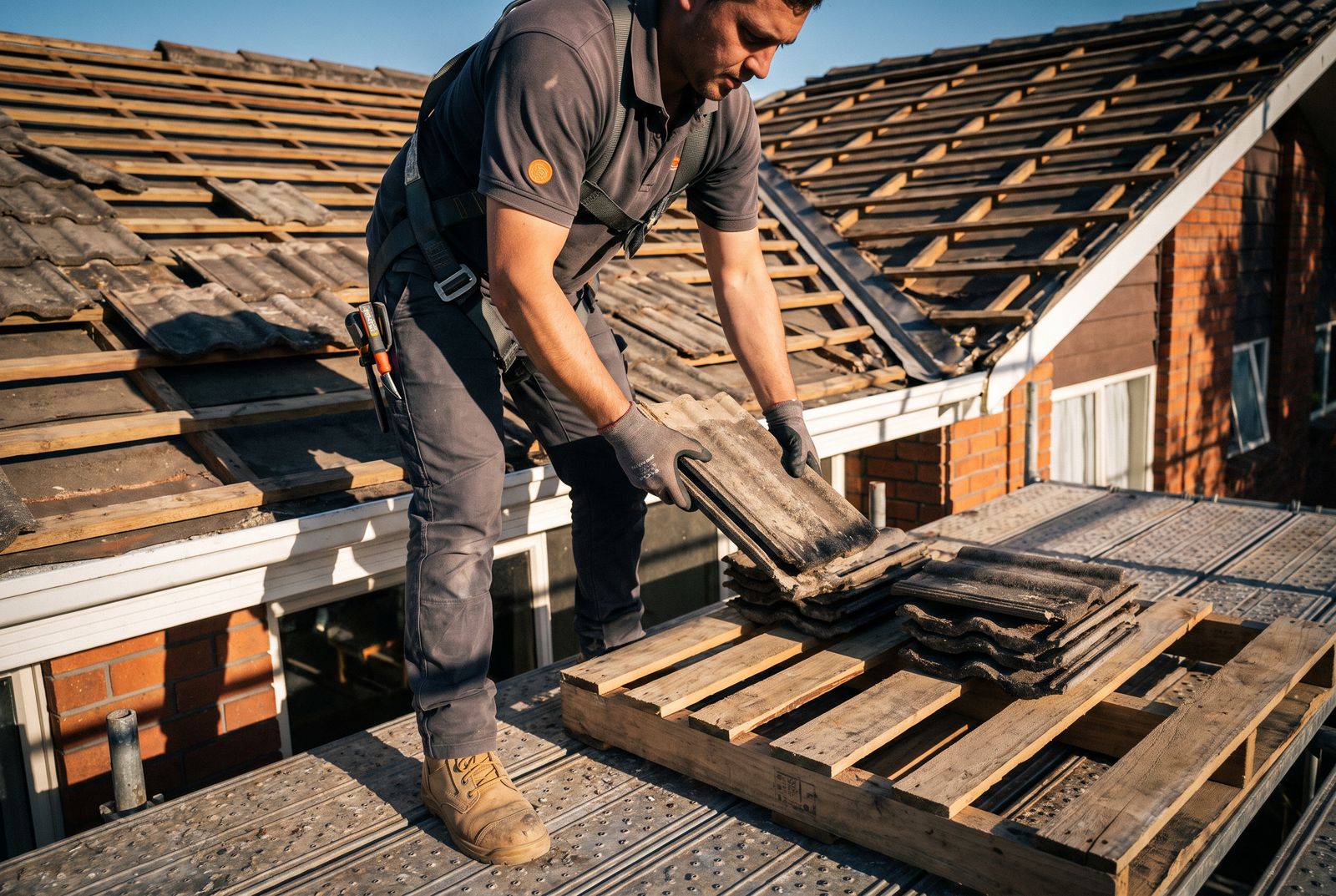
Why owners switch from tiles to steel
The headline benefit is weight. Steel roofs also have far fewer joins than a tiled roof, so there are fewer places for wind-driven rain to get in, and longrun sheets can run from ridge to gutter in one length on most houses.
Maintenance is the other reason. A steel roof does not need ridges rebedded, broken tiles sourced or slipped tiles reset, and it can be walked on with care. If your tiles are generally sound and only one area is failing, tile roof repairs may still be the better first step.
- Much less weight carried high on the frame
- Fewer joins and laps for wind-driven rain to find
- No ridge bedding, pointing or loose tiles to maintain
- A wide choice of COLORSTEEL colours and profiles
Earthquakes and a lighter roof
The Wellington Fault runs from Cook Strait through Karori and the city and along the Hutt Valley, and a rupture is expected to produce an earthquake of about magnitude 7.5. GNS has also found the offshore Aotea Fault in Wellington Harbour. When the ground shakes, the walls and bracing have to resist the mass of everything above them, and a concrete tile roof is a large share of that mass on many houses.
Swapping tiles for steel takes most of that weight off. It does not make a house earthquake-proof, and it is not a substitute for proper bracing and foundations, but it reduces the load the structure has to cope with. If you are also thinking about subfloor or bracing work, that is a question for an engineer or builder, and it can be worth doing in the same planning window.
How It Works
Battens, purlins and wind uplift
This is the part that separates a good conversion from a poor one. A heavy tile roof mainly has to hold weight up. A lightweight steel roof mainly has to stop the wind lifting it off. BRANZ guidance on replacing concrete tile roofs makes the point that uplift becomes the primary consideration, and that resistance depends on the connections between top plates and studs, rafters or trusses and the top plate, and purlins and rafters.
That matters more in Wellington than almost anywhere. NZS 3604 wind zones run from Low to Extra High, with sites above 55 m/s needing specific design, and many Wellington sites sit in the High, Very High or Extra High zones. The closely spaced tile battens come off, new purlins go on at the spacing the steel profile needs, and fixings are specified for your zone. Where the existing rafter or truss connections are light, we add fixings. The NZ Metal Roof and Wall Cladding Code of Practice and NZS 3604 set the details we work to.
Does tile to metal need building consent?
Schedule 1 of the Building Act exempts replacing a component with a comparable one in the same position. Whether concrete tile to steel counts as comparable, and whether the structural work involved changes the answer, depends on the house. Work on structural elements and complete or substantial replacement of a specified system are excluded from that exemption.
So we do not assume either way. We assess the roof structure and confirm, with your council where needed, whether the job can go ahead as exempt work or needs consent. If consent is required, the roofing is restricted building work carried out or supervised by a Licensed Building Practitioner, and your council issues a Code Compliance Certificate once it is signed off. If the house may be in a Character Precinct under the Wellington City 2024 District Plan, check that too, because a change of roof material changes how it looks from the street.
Noise, heat and how it looks
A common worry is rain noise. A steel roof laid over new underlay with good ceiling insulation is not the drum many people expect. If the ceiling insulation needs replacing, doing it while the roof is open is easy.
Steel can suit a tile-era home well. Corrugate and trapezoidal profiles are the usual choices, and colours range from dark greys to warmer tones that sit comfortably on brick and weatherboard. Browse the COLORSTEEL colours page and check a sample in daylight.
What affects the price
Tile removal adds labour and disposal compared with a steel-to-steel re-roof, and the new purlin layout adds timber and fixing time. Hipped roofs have more ridges and hips to flash. On Wellington hill sections, getting hundreds of tiles down steps or a steep path with no vehicle access takes longer than loading a truck from the driveway. Coastal sites may need a higher steel grade. Our roof replacement cost guide covers the factors, and your quote shows tile removal and structural work as separate lines. Local information is on our roofers in the Eastern and Southern Suburbs page.
Why Choose Cheeky's Roofers for Tile to Metal Re-Roofing
Structure checked first
We look at rafters, trusses and top plate connections before quoting, so uplift fixings are priced in, not found later.
Purlins for your wind zone
Tile battens come off and purlins go on at the spacing and fixing your steel profile and wind zone need.
Clear consent advice
We tell you whether your conversion is exempt or needs consent, and why, before you sign.
Tiles removed responsibly
Old tiles are stacked, lowered and taken away, even from hard to reach hillside sites.
Tile to Metal Re-Roofing FAQs
Is a steel roof noisy in the rain?
Laid over new underlay with good ceiling insulation, most people find it quieter than they expected. Rain is audible but not loud.
Do I need consent to change from tiles to steel?
It depends on the house and how much structural work is needed. We assess the roof and confirm whether the job is exempt or needs consent before quoting.
Can the existing tile battens be reused?
No. Tile battens are spaced for tiles. Steel roofing needs purlins at a different spacing, fixed to resist uplift for your wind zone.
Will a steel roof blow off in a Wellington gale?
Not when it is fixed to the right standard. The purlin spacing, screw pattern and connections are specified for your NZS 3604 wind zone, or by an engineer where specific design applies.
Does a lighter roof help in an earthquake?
It reduces the mass the walls and bracing must resist when the ground shakes. It is one part of the picture, alongside bracing and foundations.
What happens to the old tiles?
We remove them from site. Sound tiles can sometimes be kept for other people's tile repairs where practical.
Tile to Metal Re-Roofing Across Wellington
We cover every region: Central Wellington, the Eastern and Southern Suburbs, the Western and Northern Suburbs, the Hutt Valley, Porirua, the Kāpiti Coast.
Related Roofing Services
See the roof replacement cost guide or every service we offer.
Sources and further reading
- BRANZ Build 168 via MBIE Code Hub: Replacing a concrete or masonry tile roof
- BRANZ: Wind zones and NZS 3604
- Level (BRANZ): Wind zones
- Wikipedia: Wellington Fault
- GNS Science: Active fault discovered in Wellington Harbour
- MBIE building.govt.nz: Exemption 1, general repair, maintenance and replacement
- MBIE building.govt.nz: Restricted building work
- NZ Metal Roof and Wall Cladding Code of Practice
- Wellington City Council: District Plan decisions