
Cleaning a roof looks simple, but the wrong method can do more damage than the dirt. High-pressure water can strip the surface off tiles, drive water under laps and flashings and, on some older roofs, release asbestos fibres. Strong chemicals running off the roof can kill plants and end up in streams. The right approach depends on what the roof is made of, how close you are to the sea and what is growing on it.
We clean and treat steel, iron, concrete tile and membrane roofs across the Wellington region, as regular maintenance or as preparation for roof painting. Being up close is also a good chance to check the roof, so we photograph anything that needs attention and tell you about it without pushing work you do not need.
Pricing: every roof gets a free on-site measure and an itemised written quote, with a fixed price agreed before any work starts.
Paint worn through or rust showing once the roof is clean? Recoating is covered under roof painting.
Why Wellington roofs need cleaning
Moss and lichen hold moisture against the roof. On concrete tiles that speeds up surface wear, and on steel it keeps the coating damp for long spells. Winter is the wettest season across the region, and roof planes that face south or sit in the shade of a hillside or trees can stay damp for days. Wind brings its own problem: gales blow leaves and grit onto the roof, where they pile up in valleys and behind chimneys and skylights.
Close to the coast, salt settles in sheltered places that rain does not rinse, such as under eaves, along gutters and on the high sides of laps. That is where corrosion on steel roofs usually starts. Common signs a roof needs cleaning:
- Green or black growth on shaded roof planes and tiles
- Lichen patches showing as grey, white or orange spots
- Leaves and grit packed into valleys, gutters and against penetrations
- Dull, crusted or dirty areas under eaves on coastal homes
Washing steel roofs and your warranty
COLORSTEEL's warranty conditions depend on the environment your home sits in. In milder settings rain washing does the job for exposed roof areas, but sheltered areas that rain cannot reach should be washed regularly. As the environment becomes more severe, the manual washing interval shortens, from yearly to every six months to every three months, and accessories on very severe sites need cleaning monthly. NZ Steel likewise says regular washing is essential for metal roofing close to the sea. BRANZ places homes within 500 metres of the sea, harbours included, in its high corrosion zone, which covers a good share of Wellington's harbour edge and south coast.
On steel we use a low-pressure wash, a soft brush and a cleaner that is safe for the coating, paying attention to unwashed areas, laps and fixings. If we find chalking, rust spots or failed screws, we photograph them and tell you whether a repair, a repaint or new COLORSTEEL longrun roofing makes most sense.
How It Works
Moss treatment on tile roofs
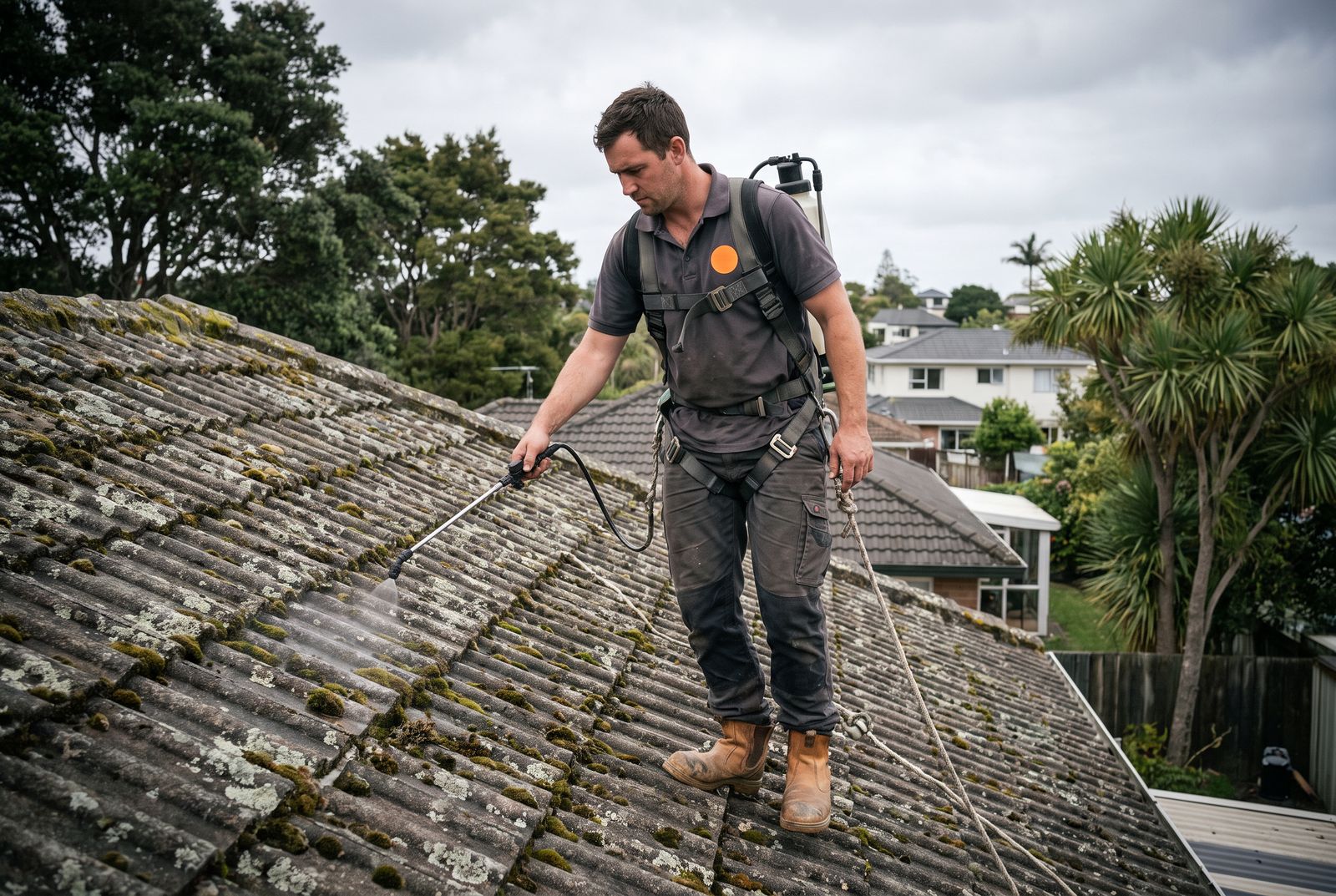
Concrete tiles are porous, so moss and lichen root into the surface. Killing the growth first means it can be removed with a gentle wash rather than aggressive blasting. Biocides need time to work: Resene's Moss and Mould Killer is diluted and left for up to 48 hours before washing, and heavy growth may need a second application. Lichen often takes longer than moss to let go, and some residue is better left to weather off than forced.
While we are on a tile roof we check for cracked or slipped tiles and loose ridge capping. If there are more than a few, our tile roof repairs page explains how they are fixed.
Asbestos and older roofs
WorkSafe New Zealand prohibits high-pressure water spray on asbestos-containing material. Its guidance treats anything over 350 kPa, or 50 psi, as high pressure, and sets out infringement fees and court fines for breaches. Super Six and other fibre cement sheet, some cement tiles and some decramastic roofs laid before asbestos was phased out can contain it. WorkSafe points to a soft wash or chemical wash instead.
If your roof might contain asbestos, we arrange testing before cleaning starts and use low-pressure methods only. For roofs in poor condition, replacement may be the safer long-term choice, and we can price both.
Protecting stormwater, tanks and gardens
Roof downpipes connect to the stormwater system, which Tiaki Wai runs for Wellington City, Lower Hutt, Upper Hutt and Porirua, and Kāpiti Coast District Council runs on the Kāpiti Coast. Stormwater pipes lead to streams, the harbour and the sea, so cleaning chemicals and moss debris must not be washed down them. We block or disconnect downpipes where needed, capture runoff, cover plants and take debris away with us. If you collect drinking water from the roof, we disconnect the tank before cleaning and tell you when it is safe to reconnect.
What affects the cost
Roof cleaning is priced on roof area and type. The amount of growth, whether a treatment and return visit are needed, pitch, height, access, runoff control and whether you want the gutters cleared at the same time all play a part. Steep hillside sections with no vehicle access take longer to set up on. Regular cleaning usually costs less than a heavy clean every few years, especially for coastal homes in places like Seatoun, Island Bay, Eastbourne, Paraparaumu Beach and Raumati, where salt builds up quickly.
Why Choose Cheeky's Roofers for Roof Cleaning
Method matched to the roof
Steel, tile, membrane and older fibre cement roofs each get the cleaning method that suits them.
Runoff kept out of stormwater
Downpipes are blocked or diverted and debris taken away, so chemicals do not reach streams or the harbour.
Warranty-aware washing
Sheltered, unwashed areas get the attention coating warranties expect, which matters most near the sea.
Photos of what we find
You see the condition of the roof, good and bad, before any further work is suggested.
Roof Cleaning FAQs
How often should I clean my roof?
It depends on exposure. Coastal and shaded roofs need it more often than sheltered, sunny ones. For steel roofs, the washing interval in the manufacturer's warranty conditions is the best guide.
Is water blasting bad for my roof?
High pressure can damage tile surfaces and coatings and force water under laps. It must never be used on roofing that contains asbestos. We use low pressure and the right cleaner instead.
Does moss damage a roof?
Moss and lichen hold moisture on the surface, which speeds up wear on tiles and keeps steel coatings damp. Killing it and removing it gently is the safest approach.
How long until the moss dies after treatment?
Treatments usually need a day or two to work, and heavy growth may need a second application. Lichen can take longer to release than moss.
Is roof cleaning safe for my rainwater tank?
Yes, as long as the tank is disconnected before cleaning and stays disconnected until the roof has been rinsed. We handle that and tell you when to reconnect.
Can you clean a roof before painting it?
Yes. Cleaning and moss treatment are the first stage of roof painting, and we can do them on their own if you plan to paint later.
Roof Cleaning by Area
Local roof cleaning information for your part of Wellington:
Related Roofing Services
Roof Cleaning Guides
See the roof replacement cost guide or every service we offer.
Sources and further reading
- COLORSTEEL: Warranty and maintenance
- NZ Steel: Design considerations for steel roofing in very severe environments
- WorkSafe: High-pressure water blasting should not be used to clean roofing containing asbestos
- WorkSafe: Cleaning weathered asbestos-containing roofing and cladding
- Tiaki Wai: Knowing your pipes
- BRANZ: Metal corrosion zones
- Resene: Moss and Mould Killer data sheet