
From the street you see almost nothing that matters about a roof. A roof can look tidy and still have perished underlay, lifting fixings or flashings that let water in sideways in a southerly. Another can look tired and have plenty of life left. An inspection gets up close, looks underneath where it is safe to, and gives you facts before you spend money on repairs, a re-roof or a house.
We inspect residential and commercial roofs across the Wellington region and provide a written report with photos. The reports are written by roofers, so they go deeper on the roof than a general building inspection, and they end with plain advice: leave it, maintain it, repair it, or plan for roof replacement, with a rough timeframe for each.
Pricing: every roof gets a free on-site measure and an itemised written quote, with a fixed price agreed before any work starts.
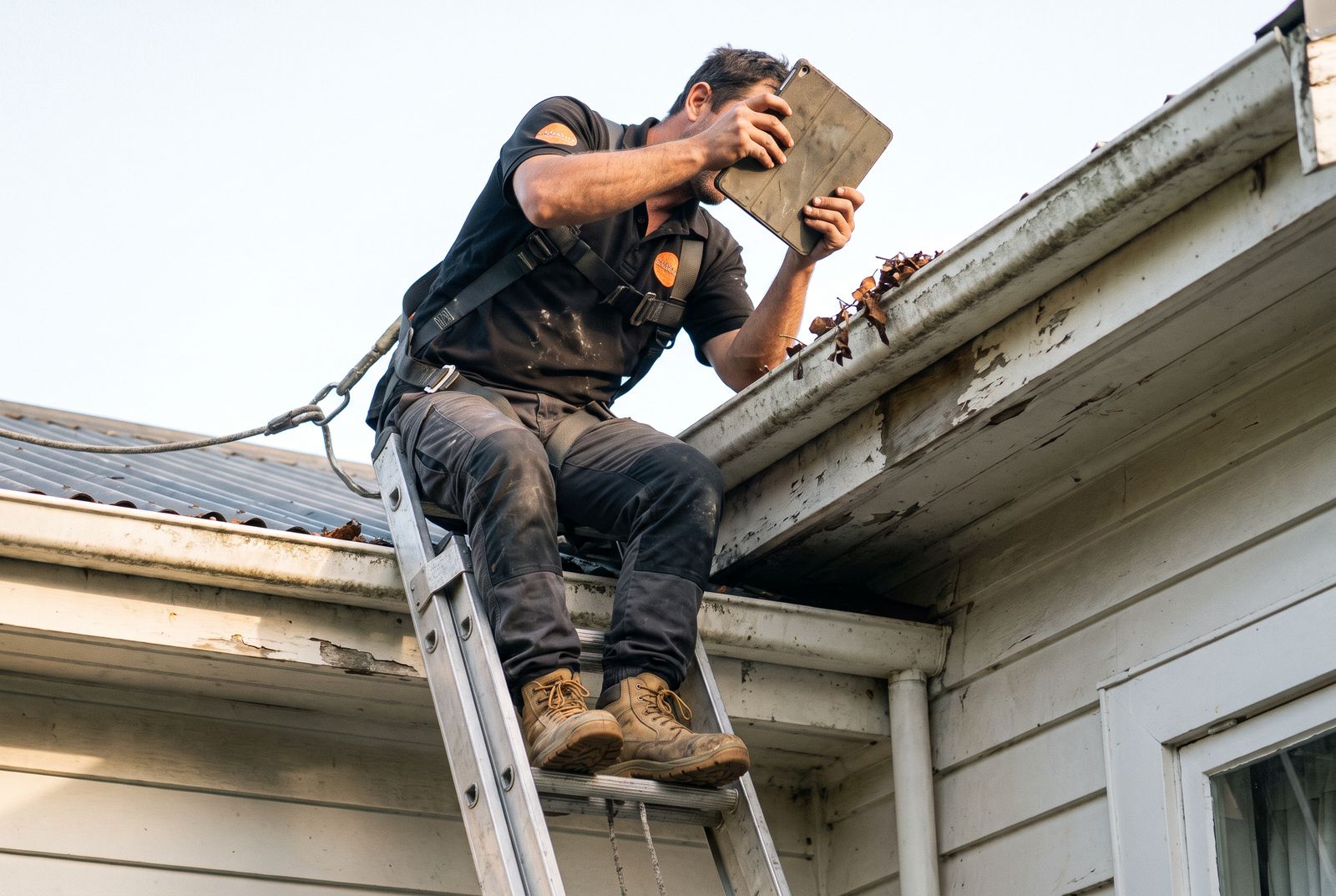
Who a roof report is for
The same roof can raise different questions depending on who is asking. We shape the report around your reason:
- Homeowners: how long the roof has left and what will extend its life
- Buyers: what the roof is likely to need in the next few years, before you commit
- Sellers: an independent report to share with buyers, plus a list of quick fixes before listing
- Body corporates and landlords: a condition baseline and a prioritised maintenance plan
- Insurance claims: storm or impact damage documented with photos and a scope of repairs
What we check
Every inspection follows the same core checklist, adjusted for the roof type. On steel that means the coating and any corrosion, laps, fixings and washers, ridging, barge and apron flashings, penetrations, valleys and spouting. On tiles it means cracked or slipped tiles, ridge bedding and pointing, valleys and the underlay. On membrane areas we look at seams, upstands, outlets and overflows.
Wellington adds two things to the list. The first is wind. Wellington Airport records gusts over 96 km/h on about 24 days a year, and the NZS 3604 wind zone for a site sets how roofing, battens and flashings should be fixed. Wellington City Council publishes wind zone maps for its urban area, and many local sites fall in the higher zones, so we look hard at fixing patterns, lifted sheet edges and loose flashings. The second is salt. Within 500 metres of the sea, harbours included, BRANZ puts homes in its high corrosion zone, so we check sheltered areas and fixings closely on coastal houses.
Where it is safe we also go into the roof space, where problems often show first: stained framing, condensation on the underside of steel, daylight through the roofing and tired underlay. Condensation can look like a leak but needs a different fix, which our roof ventilation service covers.
How It Works
What the written report includes
You get a written report with labelled photos of each issue, a summary of overall condition and recommendations ranked by urgency. Where repairs are needed we describe what they involve, so you can get comparable quotes from anyone. Where the roof is near the end of its life, we explain why and roughly how long it should last with maintenance.
For context, NZS 4306, the New Zealand standard for residential property inspection, describes a visual, non-invasive inspection that reports significant defects, gradual deterioration and significant maintenance needed. A roof report works the same way but goes further on the roof. Like any visual inspection, it records the roof on the day and is not a guarantee against future problems.
Common problems on Wellington roofs
Housing across the region gives us a familiar list. Corrugated iron on villas and workers' cottages in Newtown, Mt Victoria, Thorndon and Aro Valley, sometimes with rust at laps and nail holes after many recoats. Decramastic tiles, popular nationally in the 1960s and 1970s, losing their chip coating and rusting from the inside. Concrete tile roofs where the tiles are fine but the ridges and underlay are not. Fixings and flashings loosened by years of wind on exposed hill sites. The Building Code expects roof cladding to last at least 15 years, and many roofs we look at are well past that.
Some older materials, including fibre cement sheet such as Super Six and some decramastic, can contain asbestos. If we suspect it, we note it in the report and recommend testing before any repair, cleaning or replacement is planned. On character homes we also suggest checking whether the house sits in a Wellington City Council character precinct before planning a re-roof.
After a storm
Gales can happen in any month in Wellington, though NIWA notes they are most frequent in winter. After a big blow, insurers usually want evidence of the damage and a clear scope of repairs. We photograph the damage, separate storm damage from existing wear and provide a report you can send with your claim. The Natural Hazards Commission Toka Tū Ake (formerly EQC) covers some natural hazard land damage, while storm damage to the house itself sits with your private insurer. If the roof needs making safe first, our storm damage roof repairs team does that before the report is written.
What affects the cost of an inspection
If you are also getting a repair or re-roof quote, the roof check is part of our free measure. Standalone reports for buyers, sellers, insurers and body corporates take longer to write up and are priced before we visit. The factors are roof size and complexity, height and access, whether the roof space can be entered, how fast you need the report and the level of detail, such as a full maintenance schedule for a multi-unit building. Steep sections in the hill suburbs can need extra set-up. Get in touch through our contact page for a price.
Why Choose Cheeky's Roofers for Roof Inspections
Written by roofers
The report goes deeper on the roof than a general building inspection can.
Photos for every finding
Each issue is photographed and labelled so you can see exactly what we mean.
Advice you can use anywhere
Repairs are described clearly enough to get comparable quotes from any roofer.
Honest about remaining life
We tell you when a roof has years left, not just when it needs work.
Roof Inspections FAQs
How long does a roof inspection take?
Most homes take about an hour on site, longer for large, steep or complex roofs. The written report follows once the photos are sorted and labelled.
Is a roof report the same as a building inspection?
No. A general building inspection covers the whole house at a visual level. A roof report goes deeper on the roof, spouting and roof space.
Will you walk on my tile roof?
Only where it is safe and will not crack tiles. Otherwise we inspect from ladders, the gutter line and the roof space, and may use a camera on a pole or drone.
Can you tell how long my roof has left?
We give an honest estimate based on condition, material and exposure, and explain what maintenance could extend it. It is an estimate, not a guarantee.
Can I use your report for an insurance claim?
Yes. We document storm or impact damage with photos and separate it from general wear, which is what insurers usually ask for.
Do you check for asbestos?
We note materials that may contain asbestos and recommend testing. Testing itself is done by a specialist testing laboratory before any work is planned.
Roof Inspections Across Wellington
We cover every region: Central Wellington, the Eastern and Southern Suburbs, the Western and Northern Suburbs, the Hutt Valley, Porirua, the Kāpiti Coast.
Related Roofing Services
Roof Inspections Guides
- How Long Does a Roof Last in Wellington Wind and Salt Air?
- Condensation Under a Metal Roof: Why Wellington Ceilings Drip Without Rain
- Solar Panels on a Windy Wellington Roof: Consent, Fixings and Roof Checks
- Roof Damaged in a Wellington Gale? What to Do and What Is Covered
See the roof replacement cost guide or every service we offer.