
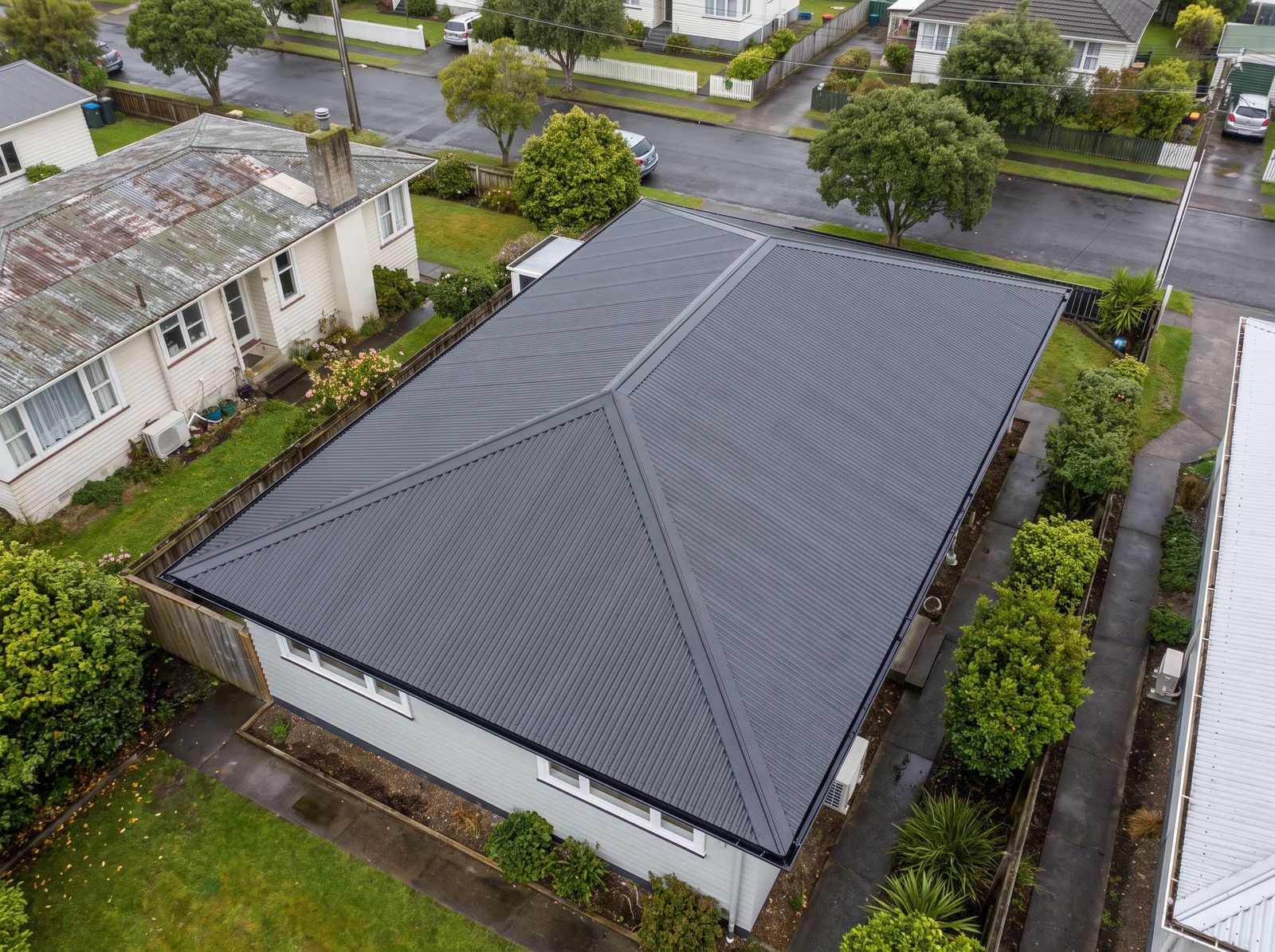
Salt is the second thing Wellington's wind delivers to a roof. The NZ Metal Roof and Wall Cladding Code of Practice explains that wind picks salt up from breaking waves and carries it inland, and that rough water, such as strong tidal flow against the wind in Cook Strait, increases salt spray. A roof that would last for decades a few kilometres inland can corrode far faster on a bay front.
This guide covers the corrosion zones, how to tell whether your house is inside the 500 m harbour zone, which materials, fixings and flashings hold up near the sea, and how often a coastal roof needs washing.
What are corrosion zones C, D and E?
They are the NZS 3604 exposure zones that describe how much sea salt reaches a site. Zone C is medium, Zone D is high and Zone E is the most severe, and each step up narrows the materials and fixings that will meet the Building Code's durability rules.
The Code of Practice is frank that corrosion zone boundaries are difficult to define, because many factors set how corrosive a site is. Where zones overlap, a site-specific evaluation can help, and the designer or roofer should choose materials for the actual location rather than the nearest line on a map.
| Zone | What it covers | What to check on the roof |
|---|---|---|
| C (medium) | Inland coastal areas with wind-blown sea spray | The manufacturer's environment rating for sheets, fixings and flashings |
| D (high) | Within 500 m of the sea including harbours, within 100 m of tidal estuaries and sheltered inlets, and offshore islands | A product rated for the zone, fasteners of the class the manufacturer specifies, and a washing plan |
| E (most severe) | Breaking surf beach fronts | Products rated for the harshest sites, matching fasteners and strict washing |
Is my house inside the 500 m harbour zone?
If your section is within 500 m of the sea or a harbour, it is likely to be Zone D or higher, but confirm it for your exact address on BRANZ Maps. Zone boundaries have been disputed in some MBIE determinations, so treat the map as a strong guide rather than a guarantee.
Because the 500 m rule includes Wellington Harbour and Porirua Harbour, it reaches further than many owners expect. Housing likely to be Zone D or E includes much of Oriental Bay, Eastbourne, the Petone foreshore, Lyall Bay, Island Bay, Seatoun, Tītahi Bay, Plimmerton and the Paraparaumu and Raumati beachfronts. Likely is the key word: check your own address.
Exposure counts as well as distance. Seatoun sits on an exposed promontory at the harbour entrance, and Island Bay faces Cook Strait from its small bay, so homes on those fronts take salt-laden wind directly. The Code of Practice also notes that open flat land and natural wind tunnels can carry high salt levels several hundred metres inland. Our roofers work right across the eastern and southern suburbs, where much of this coastline sits.
What is the best roofing material for coastal Wellington?
There is no single best material. The best coastal roof is one the manufacturer rates for your corrosion zone, installed with matching fixings and flashings and then maintained. For most homes that means a pre-painted steel product picked from the manufacturer's environment table, or another material rated for the zone.
According to the Code of Practice, suppliers of pre-painted metal offer different metallic coatings, paint systems, paint thicknesses and metals for different environments, and the designer or roofing contractor should assess those options against the Building Code. COLORSTEEL, for example, publishes which of its products suit which environment along with the maintenance each one needs.
Aluminium and stainless steel are also used on very exposed sites, but they bring their own fixing, compatibility and cost questions, so they need a careful specification rather than a straight swap.
If you are replacing a tired coastal roof, our COLORSTEEL longrun roofing page explains the profiles and options we install.
Living near the sea?
Cheeky's Roofers can check your corrosion zone, fixings and flashings, and recommend repair, washing or replacement.
How often should a coastal roof be washed?
Wash the areas rain does not reach on the schedule your roofing manufacturer sets for your environment; NZ Steel says regular washing down is essential where metal roofing and cladding is used close to the sea. COLORSTEEL's published maintenance tables, for example, rely on rain washing for exposed roofing but call for manual washing of wall cladding and accessories, from once a year to as often as every three months as the environment gets harsher.
Rain rinses the open roof, but salt builds up in sheltered spots. The Code of Practice notes that surfaces without regular and effective rain washing or manual washing can corrode two to three times faster than cleaned surfaces.
Use low-pressure water and a soft brush. High-pressure blasting can damage painted coatings, and WorkSafe warns it must never be used on roofing that may contain asbestos. Our roof cleaning service treats moss and lichen and cleans salt-affected areas without damaging the surface. The places to focus on:
- Soffits and the underside of eaves.
- Roof areas sheltered by an upper storey, a balcony or an overhanging tree.
- The backs of spouting, fascia and the tops of walls under the roof edge.
- Flashings and any steel under a verandah or carport.
Which fixings and flashings last near the sea?
Fixings and flashings that are rated at least as highly as the sheet itself. The Code of Practice says a fastener's durability should equal or exceed that of the material it fastens, and asks for at least Class 4 fasteners in severe environments and Class 5 in very severe ones.
Flashings sit at junctions where salt and water can collect, so check them closely on any coastal roof. If yours are pitting or staining, our roof flashing repairs page explains how they are replaced in matching steel.
Fixing choice matters most during a re-screw or re-roof; our guide to roof screws in the wind covers the screw side in more detail. On any coastal job, look for:
- Screws with low-carbon, non-conducting sealing washers, compatible with the sheet's coating.
- Flashings in the same material and coating class as the roof, so they do not fail first.
- No contact between incompatible metals; follow the roofing manufacturer's compatibility advice.
- Swarf and offcuts cleaned off the roof the same day, before the steel filings rust and mark the paint.
When should a coastal roof be checked by a roofer?
Get it looked at once a year, after major storms, and whenever you see rust spots, lifting paint or white corrosion on fixings or spouting. Early coastal corrosion can often be treated or repaired; once it has eaten through the sheet, replacement is usually the only lasting fix.
Cheeky's Roofers inspects coastal roofs across Wellington, Porirua, the Hutt Valley and Kāpiti, checks the corrosion zone for your address, and gives you a repair, wash or replace recommendation backed by photos.
What is the short answer?
If your house is within 500 m of the sea or a harbour, it is likely to be Zone D or higher, so check your address on BRANZ Maps. Choose a roof rated for that zone, use fixings and flashings that will last as long as the sheet, and wash the sheltered areas regularly. If your coastal roof is due for replacement, book a free measure and written quote.
Frequently Asked Questions
Is the Hutt Valley coastal for roofing purposes?
Parts of it are. The Petone foreshore and Eastbourne sit beside Wellington Harbour, so homes there are likely to be Zone D or higher, while much of the valley floor further north is not. Distance and exposure change street by street, so check the exact address on BRANZ Maps.
Does washing affect my roof warranty?
It can. Pre-painted steel warranties are tied to maintenance, and COLORSTEEL's published tables, for example, set manual washing intervals for cladding and accessories that shorten as the environment gets harsher. Read your warranty documents for your product and zone, and keep a simple record of each wash.
Can I clean a coastal roof with a water blaster?
Avoid high pressure. It can damage painted coatings, and WorkSafe says high-pressure water blasting must never be used on roofing that may contain asbestos. Low-pressure water with a soft brush is the safer way to remove salt deposits from sheltered areas such as soffits and spouting backs.
Why do my spouting and fascia rust before the roof?
They sit in shelter, so rain does not rinse the salt off them. The Code of Practice notes that unwashed surfaces can corrode two to three times faster than cleaned ones, which is why spouting backs, fascia and the underside of the roof edge often show corrosion first near the sea.
Does Zone D mean I need stainless steel screws?
Not necessarily. The Code of Practice asks for a minimum of Class 4 fasteners in severe environments and Class 5 in very severe ones, made from materials compatible with the roof. Stainless suits some sites but must be compatible with the sheet, so follow the roofing manufacturer's fastener advice.
Our Services
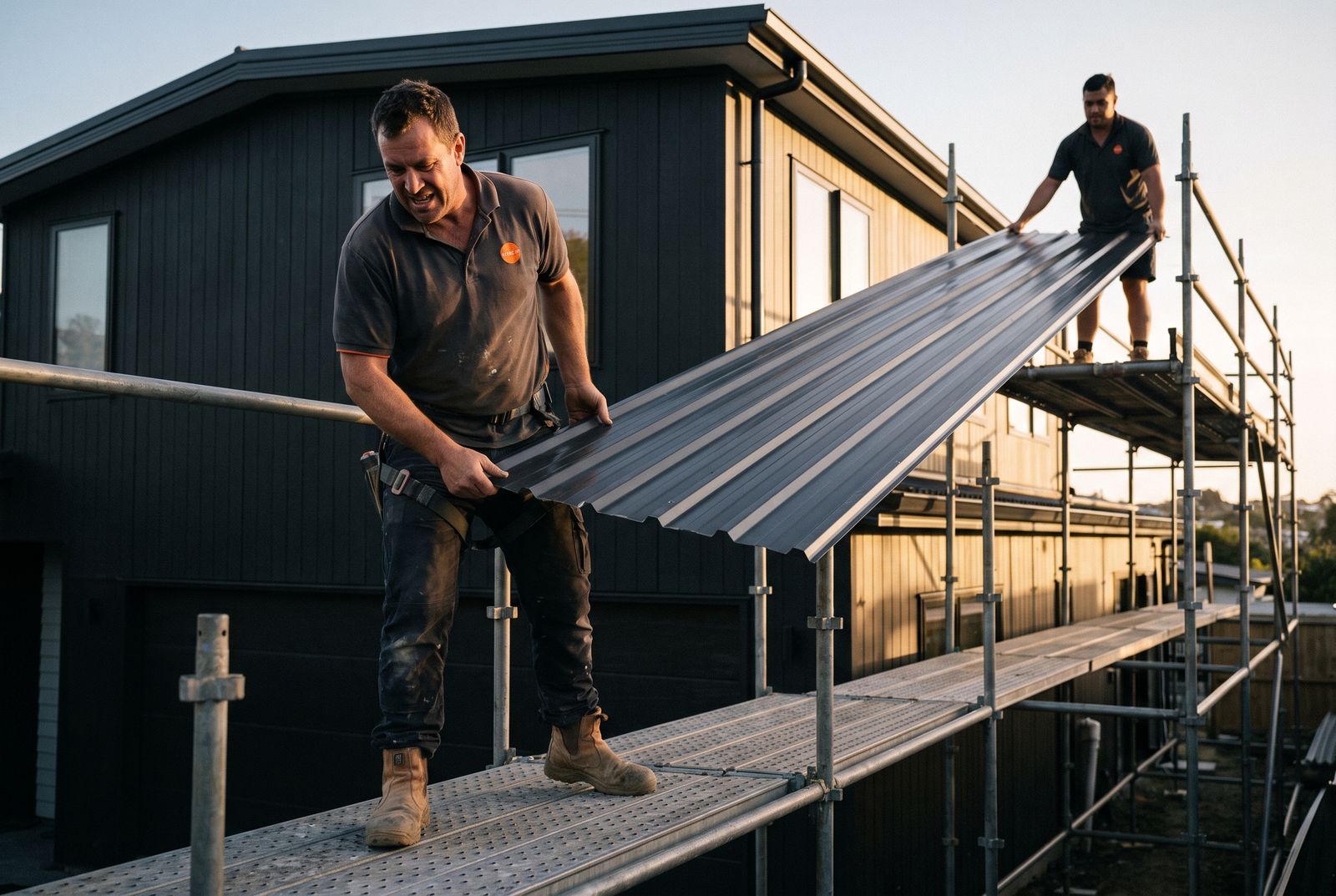 Metal RoofingLongrun COLORSTEEL roofing in corrugate and trapezoidal profiles, rolled to length for your roof.
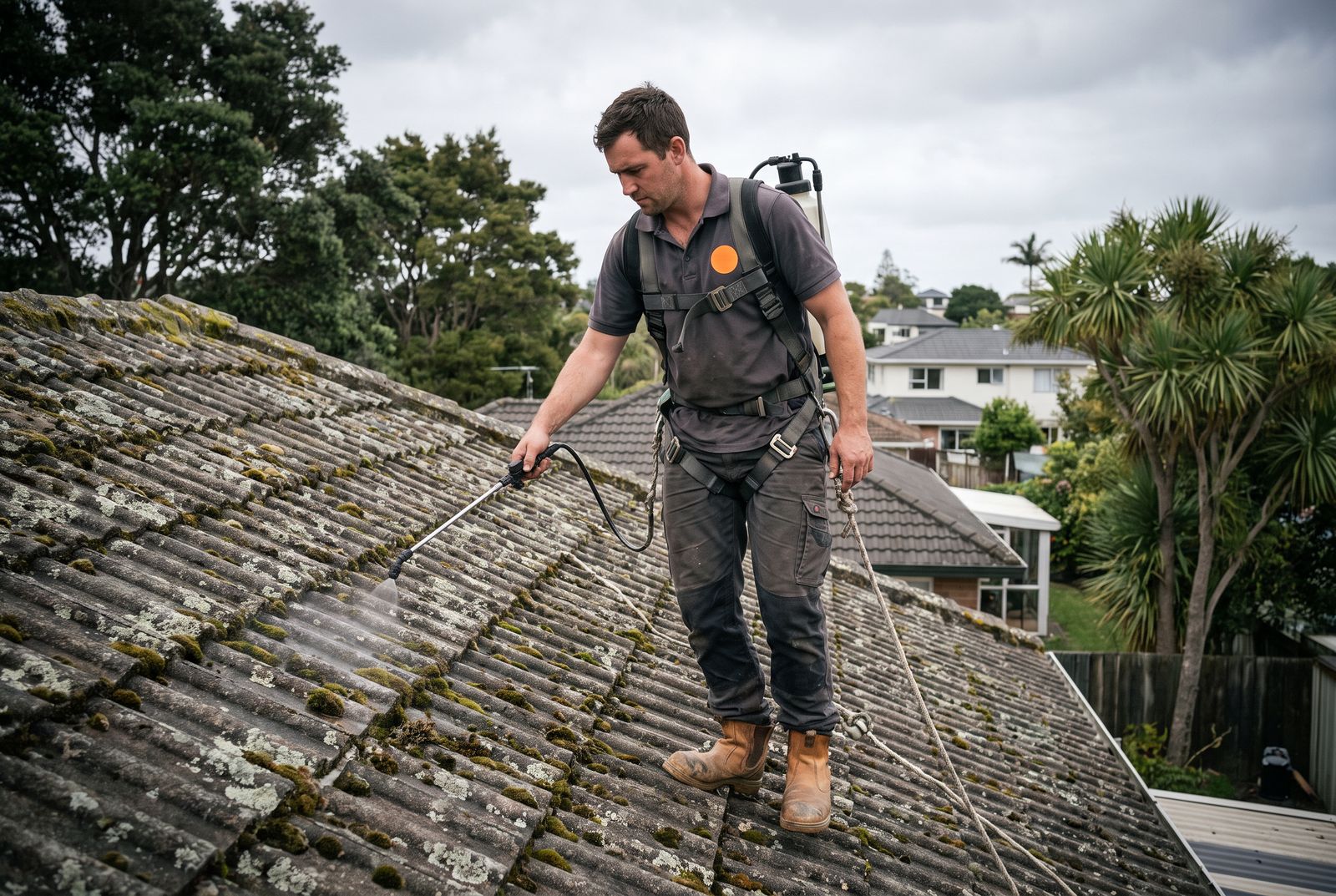 Roof CleaningMoss, lichen and grime removed with the right treatment for your roof type, without damaging the surface.
Read Next
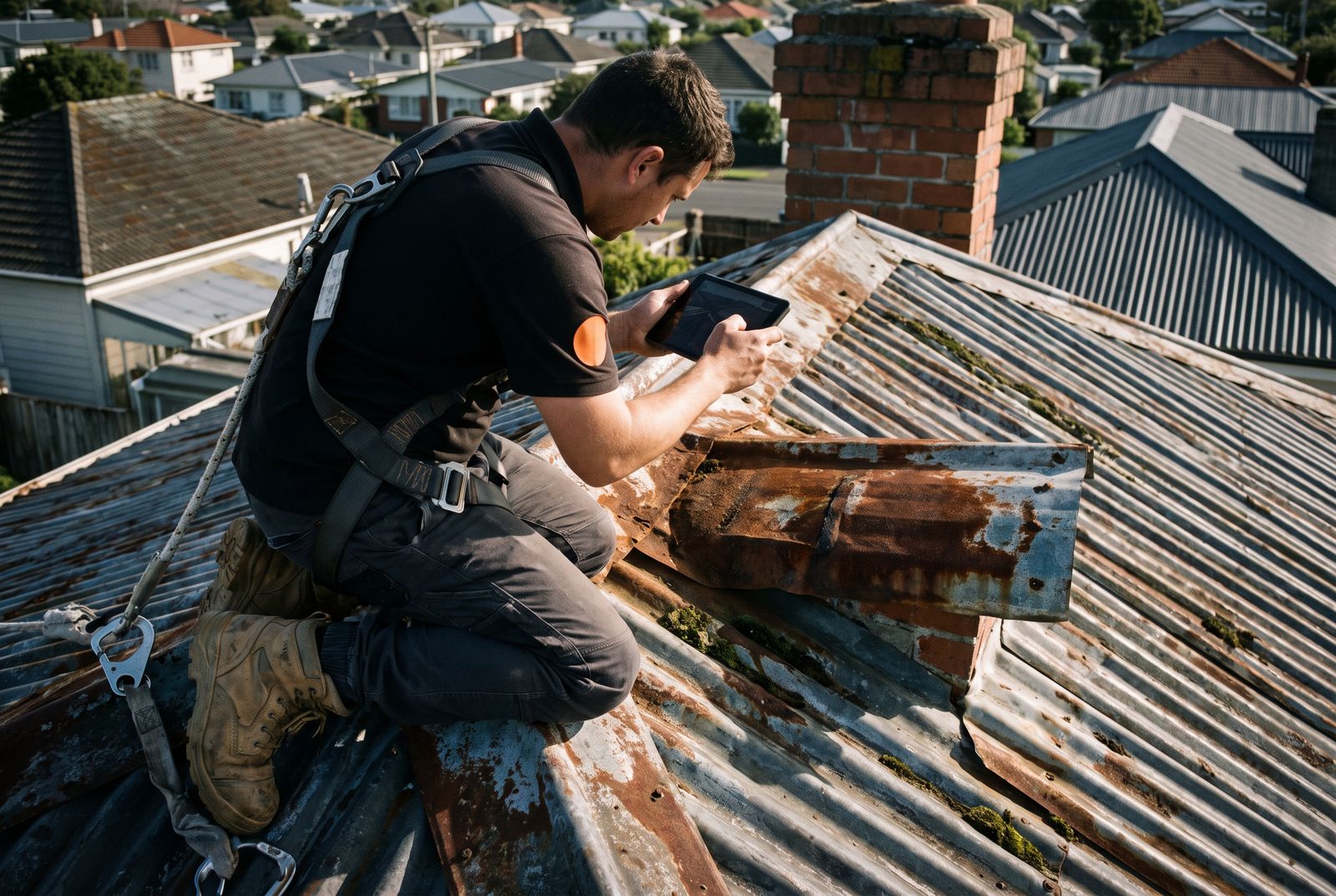
Roof Rattling in the Wind? Replacing Roof Nails With Screws
A roof that rattles or bangs in the wind usually has fixings that have loosened, most often old nails that have backed o...
Read article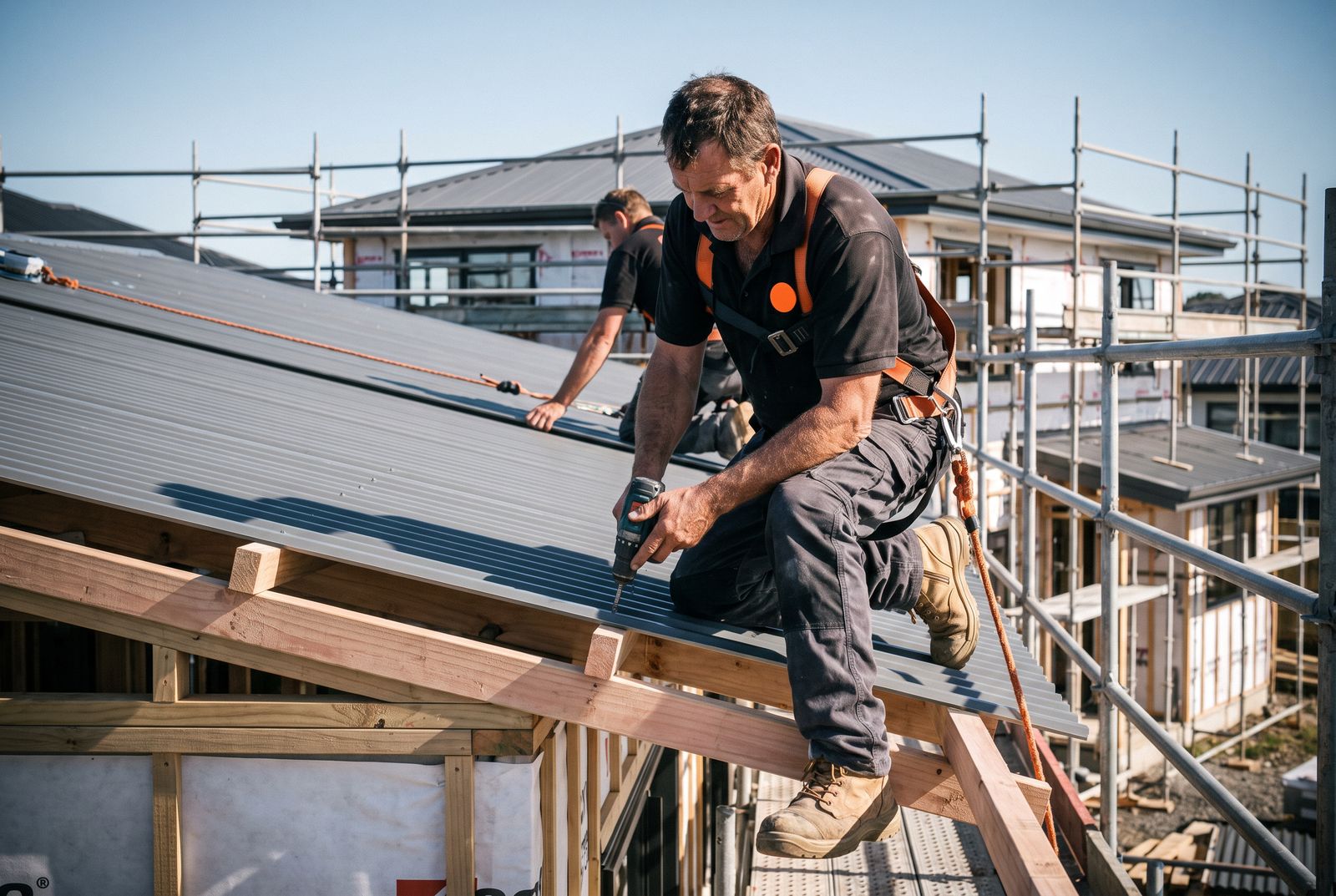
What Wind Zone Is My House In? Wellington Wind Zones Explained
Your wind zone is set for your exact site under NZS 3604, not for your suburb. In Wellington, check your LIM or consent ...
Read article
Roof Damaged in a Wellington Gale? What to Do and What Is Covered
Make the house safe first, then photograph everything and call your insurer. House insurance is designed for sudden dama...
Read article