
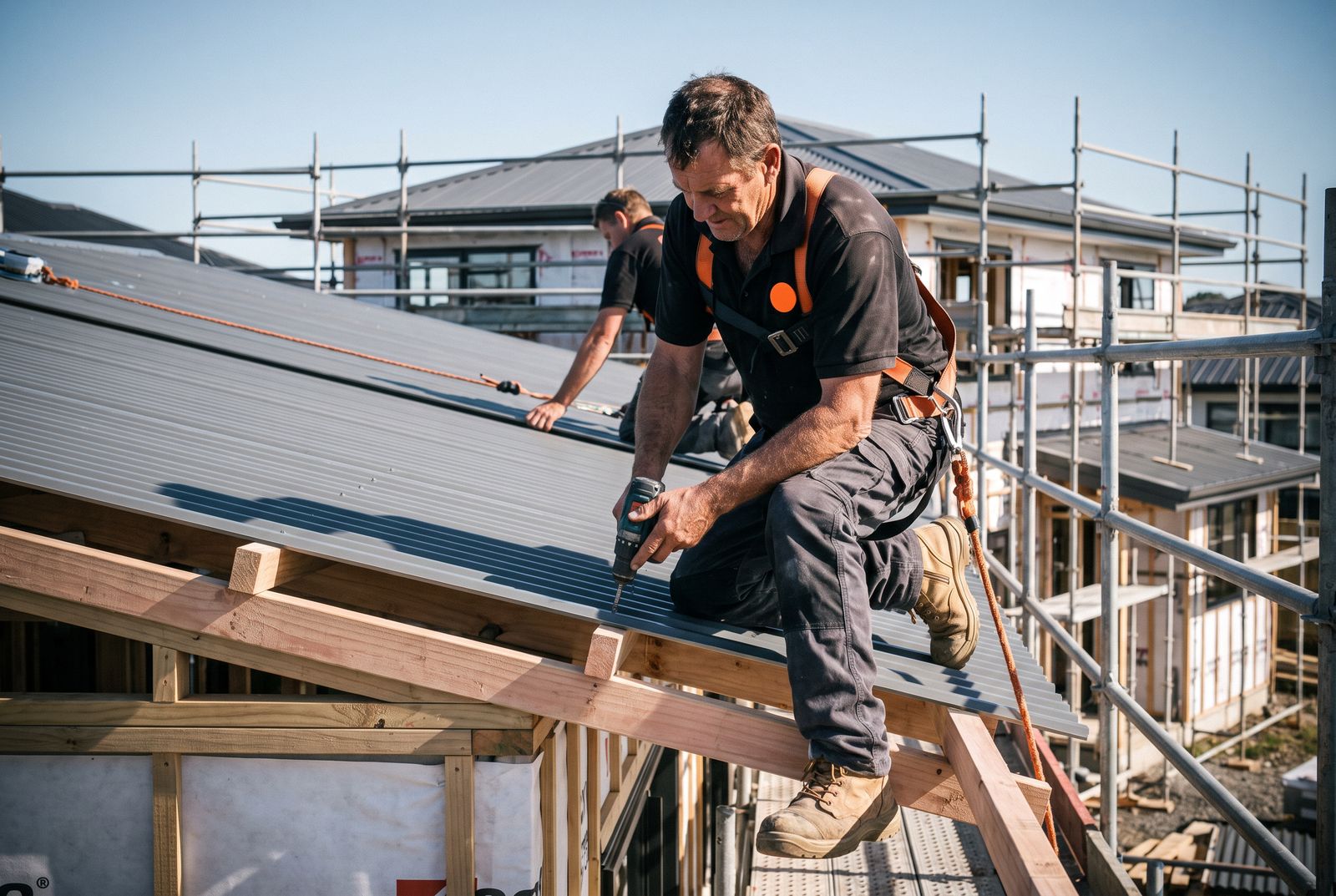
Wellington is one of the windiest places most New Zealanders will ever own a roof. NIWA's climate record shows Wellington Airport gets gusts over 96 km/h on 24 days in an average year, and the Wahine storm of 10 April 1968 produced a 198 km/h gust at Kelburn. That is why the wind zone printed on your property paperwork matters more here than in most cities.
This guide explains how to find your zone, what each zone means, why so many Wellington sites sit in the upper bands, and what changes on the roof as the zone goes up. If you are planning a re-roofing job, it is the first number your roofer should ask for.
How do I find my wind zone in NZ?
The most reliable answer is on your property's own paperwork: a LIM or the approved building consent plans usually state the wind zone. If neither is to hand, the council and BRANZ publish tools that give a strong indication, but they are a guide rather than a ruling.
Greater Wellington Regional Council also publishes a regional wind map, but it states plainly that the map may not be used to determine a wind zone for design or consent. If you live in Hutt City, Upper Hutt, Porirua or Kāpiti, ask your council what it holds, and expect the definitive answer to come from a NZS 3604 assessment of your site.
Two houses on the same street can sit in different zones. A house on an exposed ridge, at the top of a steep bank or with open ground in front of it can rate higher than one tucked into a gully a few doors away, because NZS 3604 looks at shelter and landform, not postcodes.
Level, the BRANZ guidance site, lists the ways to establish a wind zone from most to least precise:
- A site-specific calculation by an engineer under AS/NZS 1170.2.
- A site calculation under NZS 3604:2011, which steps through wind region, lee zone, ground roughness, site exposure and topographic class.
- A council wind map based on either standard. Wellington City Council publishes NZS 3604 wind zones for its urban areas.
- BRANZ Maps, which BRANZ describes as experimental and not yet precise enough to give a definitive zone for a single site.
What do Low, Medium, High, Very High and Extra High mean?
Each zone is a band of design wind speed: the maximum ultimate limit state wind speed the building has to be designed for. The higher the zone, the bigger the uplift and pressure loads the roof structure and cladding must resist.
These are design figures, not forecasts. For comparison, the Extra High design speed of 55 m/s works out at about 198 km/h, the same as the strongest gust NIWA has recorded at Kelburn.
Above 55 m/s a site falls outside NZS 3604 and needs specific engineering design. Level also notes that the simplified zones can over or under estimate a real site, so an engineer's assessment is sometimes the more cost-effective route even below that line.
| NZS 3604 wind zone | Maximum ultimate limit state wind speed | Approx. km/h (converted) |
|---|---|---|
| Low | Up to 32 m/s | 115 |
| Medium | 37 m/s | 133 |
| High | 44 m/s | 158 |
| Very High | 50 m/s | 180 |
| Extra High | 55 m/s | 198 |
| Specific Design | Over 55 m/s | Over 198 |
Why are so many Wellington sites Very High or Extra High?
Because the city combines a very windy climate with steep, exposed terrain, and NZS 3604 adds load for both. Many Wellington sites are in High, Very High or Extra High wind zones, and some need specific design.
The climate side is well documented. NIWA's figures show Wellington Airport gets gusts over 63 km/h on 166 days a year, and Baring Head on the south coast gets them on 255 days. Hawkins Hill has recorded a 248 km/h gust, the highest measured in the North Island. Gales can arrive in any month but are most frequent in winter.
The terrain side matters just as much. NZS 3604 raises the zone for hilltops and escarpments, for open ground with little shelter, and for lee zones where landforms speed the wind up. A great deal of Wellington housing sits on ridges and hillsides, from Brooklyn and Kelburn to the slopes above the Hutt Valley, so the topographic step in the calculation often pushes a site up a band or more.
The Kāpiti Coast is far more sheltered: Paraparaumu Airport records gusts over 96 km/h on about 8 days a year, against 24 at Wellington Airport. That does not make every Kāpiti site Low or Medium, but it shows why a roof specification copied from one part of the region may not suit another.
Not sure your roof suits its wind zone?
Cheeky's Roofers can inspect your fixings and flashings and give you a written report with photos.
How does the wind zone change the way a roof is fixed?
The wind zone sets the fixings, the fixing pattern and the flashing sizes for the whole roof. It feeds into Building Code clause B1 (structure) and clause E2 (external moisture), so it affects both how the roof stays on and how it keeps water out.
This is why a like-for-like reroof is rarely exactly like for like in Wellington. An older roof may have been fixed to a lower standard than today's practice asks for your zone, and new COLORSTEEL longrun roofing has to be fixed to suit the zone the site is in now. In practice the zone changes four things:
- Sheet fixings: the NZ Metal Roof and Wall Cladding Code of Practice gives fastening pattern tables for each zone, and profiled load-spreading washers can raise a fastener's resistance by up to 50 percent.
- Purlin fixings: uplift passes from the sheets to the purlins and then into the frame, so the purlin connections are rated to the zone as well.
- Flashings: the Code of Practice requires wider flashing cover in Very High zones on low pitches and in all Extra High zones. A standard ridge needs 130 mm of cover in the lower category and a wide ridge with 200 mm in the higher one.
- Specific design: on sites above Extra High, an engineer sets the fixing details and the roofer works to them.
Where is the wind zone on my LIM or consent plans?
On a LIM, look in the building or property information section, where the wind zone is often listed near the earthquake or exposure zone. On consent plans it usually appears on the site plan, in the specification or in the structural notes, written as 'Wind zone: High' or similar.
As an example, a Wellington City Council LIM for one property in Tawa records a Very High wind zone. That figure belongs to that property only. A neighbour higher up the hill or further down the valley could sit in a different band, so read your own documents rather than relying on someone else's.
If your plans are old or missing, councils can supply the property file, which often holds earlier consent drawings. For a new roof on a new build or extension, the wind zone will be on the consented plans and the roofer has to follow it.
When should you get a roofer to check your roof against its wind zone?
Get it checked before you buy, before you reroof, and after any storm that lifts sheets, flashings or ridge capping. Those are the moments when a roof fixed to an older or lower standard tends to show it.
Cheeky's Roofers carries out roof inspections that record the fixing type, spacing and flashing condition with photos, and compare them with the zone on your documents. We cover the whole region, including the western and northern suburbs where many homes sit on exposed hillsides. Signs worth booking a check for:
- Sheets that lift, flap or rattle in a strong wind.
- Nail heads standing proud of the sheet, or rust streaks around fixings.
- Flashings or ridge capping that have moved, bent or come loose.
- A roof that has not been inspected since it was installed.
What is the short answer?
Your wind zone belongs to your site, not your suburb, and it is written on your LIM or consent plans. In Wellington it is often High or above, and it decides how every sheet, fixing and flashing on your roof is installed. If you are unsure whether your roof matches it, book a free roof inspection and we will check.
Frequently Asked Questions
Is BRANZ Maps good enough for a building consent?
Not on its own. BRANZ describes the wind zone layer in BRANZ Maps as experimental and not yet precise enough to settle the zone for a single site. It is a useful first look, but a consent needs a zone worked out under NZS 3604 or a specific design, usually by the designer or an engineer.
Do wind zones apply in the Hutt Valley, Porirua and Kāpiti too?
Yes. NZS 3604 wind zones apply to timber-framed buildings across New Zealand. Wellington City Council publishes wind zone data for its urban areas; elsewhere in the region, ask your council what it holds and check your LIM or consent plans for the zone recorded for your property.
What is a lee zone?
A lee zone is an area where the shape of the land speeds the wind up as it passes over or around hills, so sites there are rated higher than their position alone suggests. Lee zones are one of the steps in the NZS 3604 calculation, which is one reason neighbouring streets can end up in different zones.
Does a higher wind zone make a reroof cost more?
It can, because higher zones usually call for more fixings, wider flashings and sometimes stronger purlin connections, which add materials and labour. How much depends on the roof, so the only reliable figure is a measured quote for your site. Our re-roofing quotes start with a free measure and written quote.
Who decides the wind zone for my house?
For new work, the designer works it out under NZS 3604, or an engineer does on a specific design site, and the council checks it through the building consent. For an existing house, the zone on your LIM or original plans is the starting point, and a roofer should flag anything that looks wrong.
Our Services
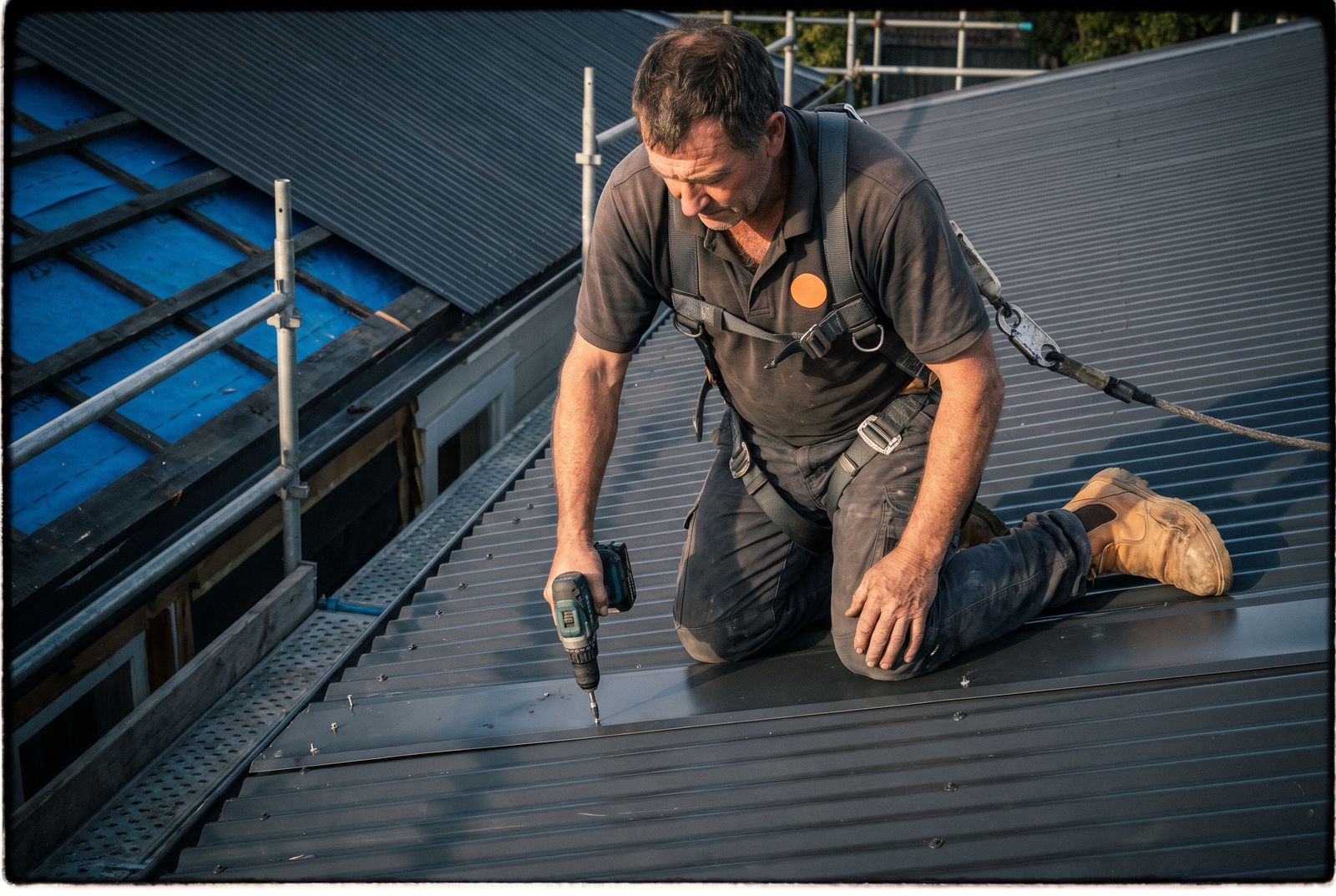 Re-RoofingA full re-roof replaces your old roofing, underlay and flashings with a new COLORSTEEL roof built to today's Building Code.
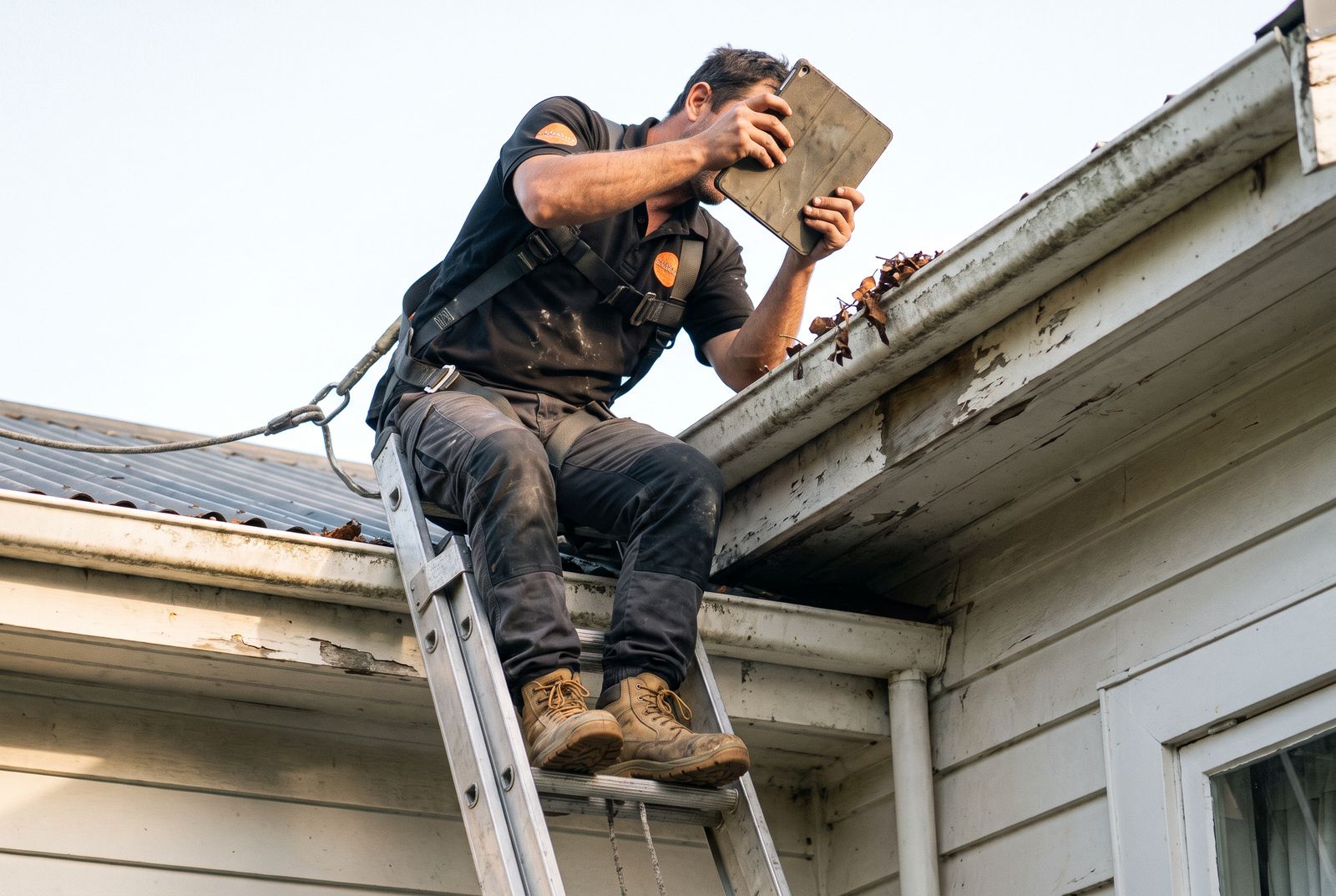 Roof InspectionsA detailed roof report with photos and honest repair or replace advice, for owners, buyers and insurers.
Read Next
Roof Rattling in the Wind? Replacing Roof Nails With Screws
A roof that rattles or bangs in the wind usually has fixings that have loosened, most often old nails that have backed o...
Read article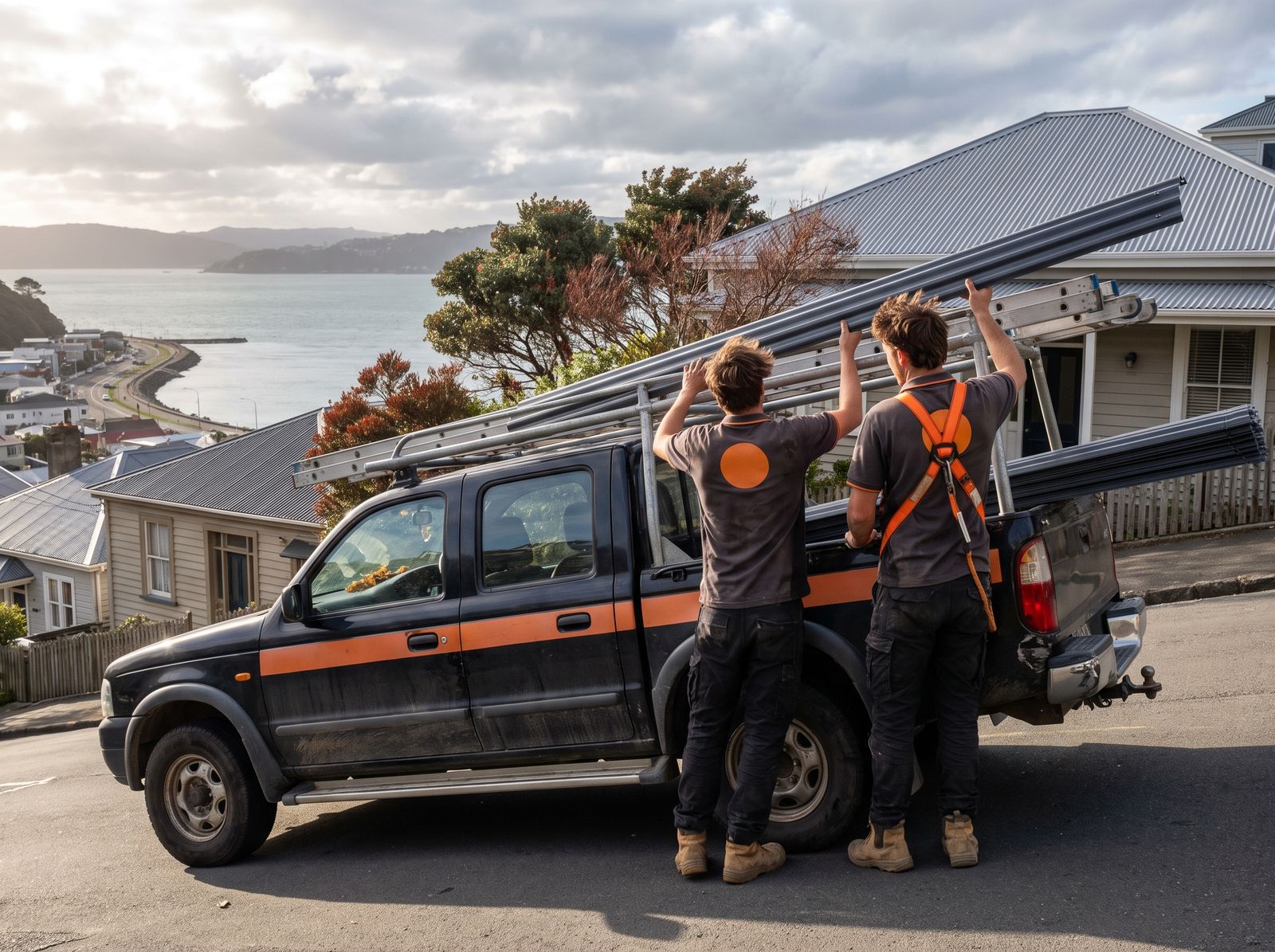
Why Does My Roof Only Leak in a Southerly? Wind-Driven Rain Explained
A roof that only leaks in strong wind and rain usually has a gap that stays dry in calm rain but lets water in when wind...
Read article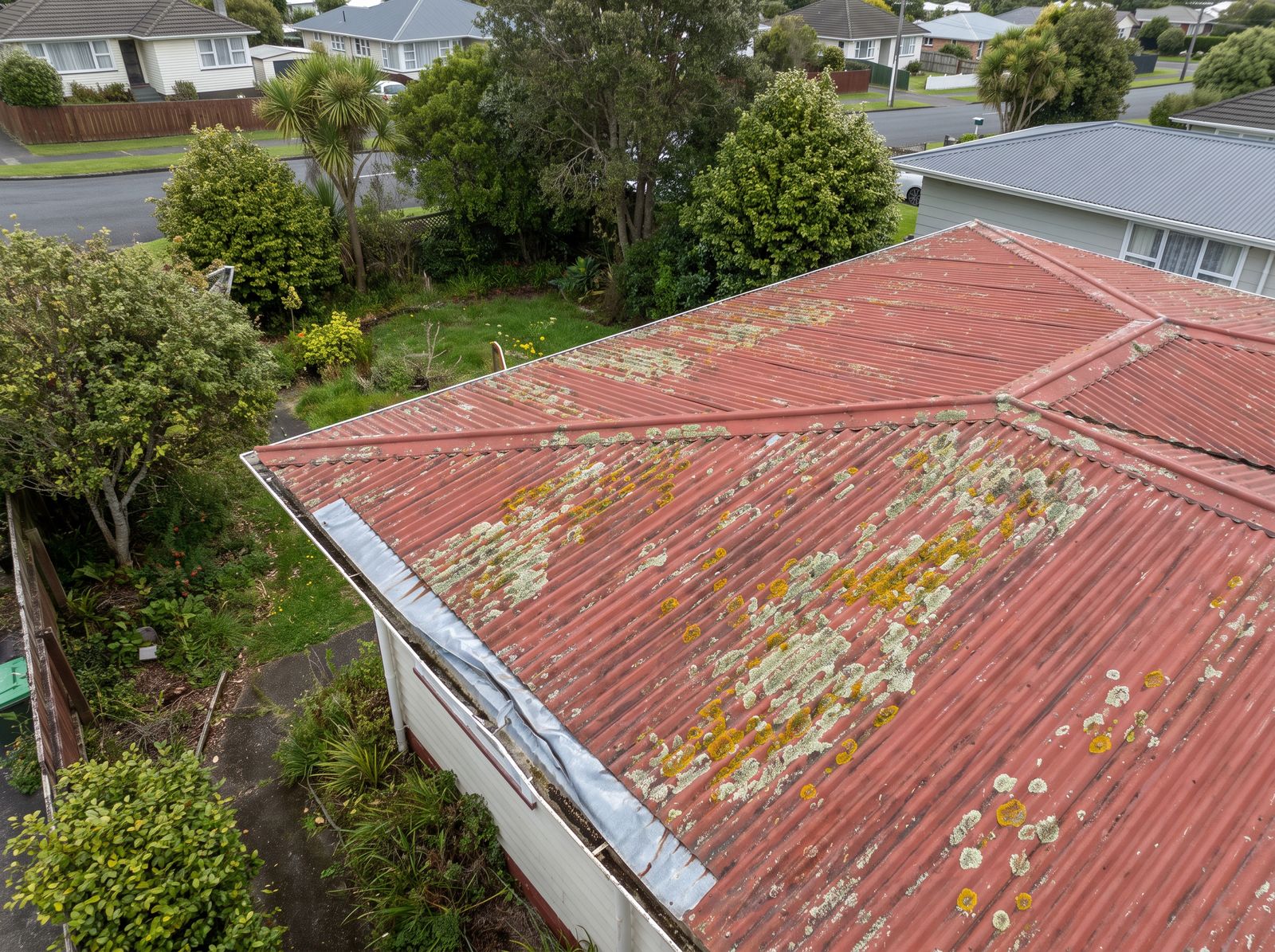
Roof Damaged in a Wellington Gale? What to Do and What Is Covered
Make the house safe first, then photograph everything and call your insurer. House insurance is designed for sudden dama...
Read article