
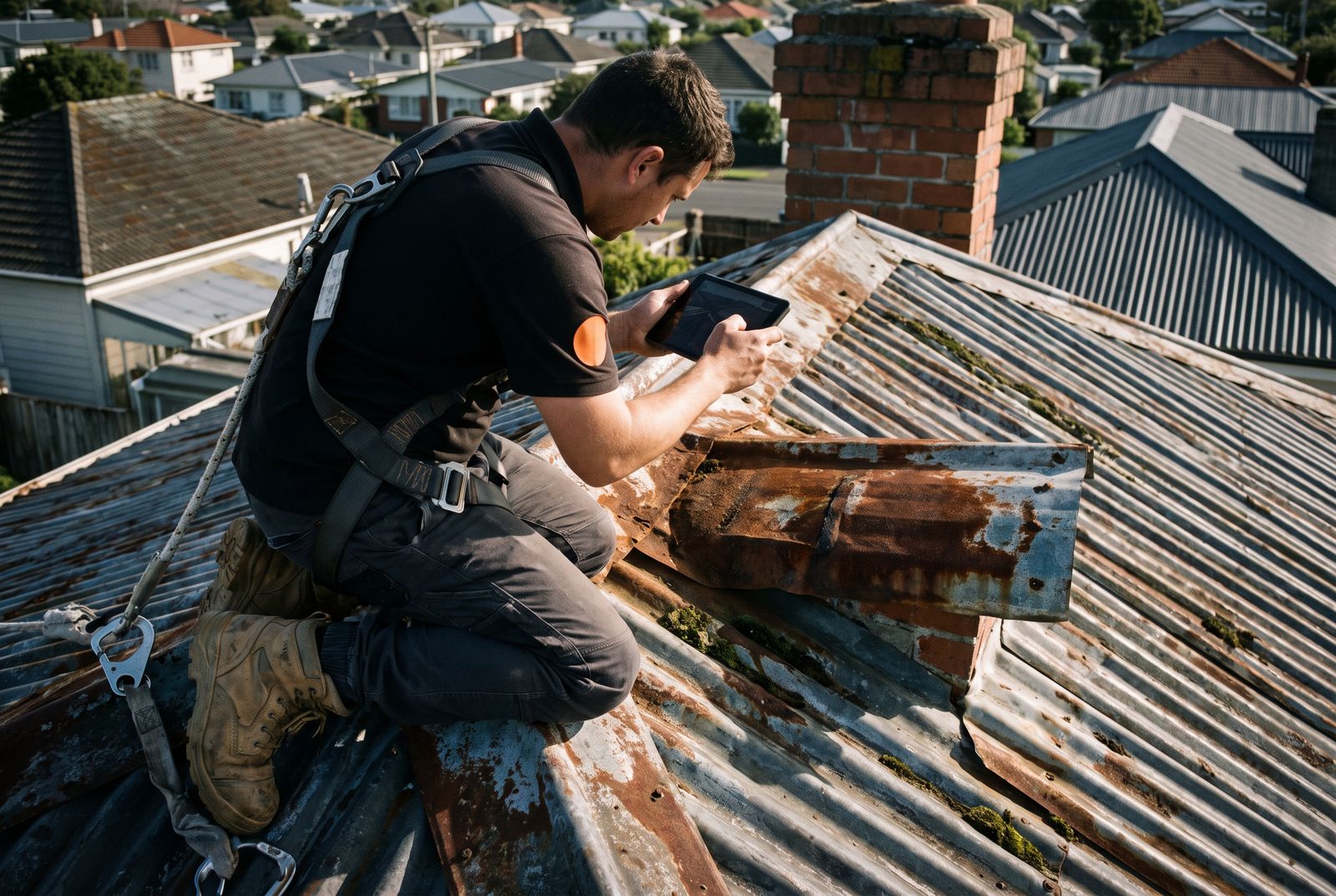
In Wellington the wind does the testing. NIWA's records show Wellington Airport gets gusts over 96 km/h on 24 days in a typical year, and each gust flexes the roof sheets against their fixings. Over the years nails work loose, washers perish, and sheets start to lift and slap.
This guide covers why roofs rattle, when nails should be swapped for screws, how the wind zone sets the number of fixings, which screws suit a house near the sea, and how loose fixings turn into leaks. If the noise has already become a drip, our roof leak repairs page explains what happens next.
Why does my roof rattle or bang in the wind?
Most rattling comes from sheets that are no longer held tight to the purlins, so the wind lifts them and drops them back. Loose or missing fixings are the usual cause, but a few other things are worth ruling out.
A bang in a gust is a stronger warning than a creak in the sun. It means part of the roof is moving under load, and the Code of Practice notes that most fastener failures happen when uplift pulls the fastener out of its support. The usual culprits:
- Nails that have backed out: driven fasteners lift a little with each cycle of wind and temperature.
- Perished or split washers that let the sheet move around the fixing.
- Fixings that missed the purlin or have lost their grip in soft or rotten timber.
- Loose ridge capping, barge flashings or apron flashings flapping at the edges.
- Expansion and contraction: a ticking or creaking sound as steel warms and cools, which is common and not the same as banging.
Should roof nails be replaced with screws?
Yes, in most cases. The NZ Metal Roof and Wall Cladding Code of Practice recommends screws rather than driven fasteners in all cases, because nails can back out over time.
History explains why many Wellington roofs still have nails. Until 1980 the traditional New Zealand roof fastener was the lead head nail, which often backed out and caused leaks, and lead is incompatible with modern metallic coatings. Spiral shank nails followed. The Code of Practice says the spiral shank has over twice the withdrawal resistance of a smooth shank nail, but it is still prone to backing out, and its under-head seal is not as robust as the neoprene seal on a modern roofing screw.
Re-screwing works well when the sheets are sound. If the steel is rusted through at the laps or around the old nail holes, new screws only clamp a failing sheet tighter, and part replacement or a re-roof is the better spend.
Screws also need something to grip. The Code of Practice says screws into timber generally need 30 mm of embedment, so a roofer should check the purlins before relying on new fixings. Rotten purlins are one reason a simple re-screw can turn into a bigger repair.
How many fixings does a roof sheet need in a high wind zone?
There is no single number: the Code of Practice sets fastening patterns by wind zone, roof profile and purlin spacing, and the tables tighten as the zone rises. Your roofer should work from the table for your zone, or from an engineer's details on a specific design site.
Many Wellington sites sit in High, Very High or Extra High wind zones. The zone comes from your LIM or consent plans, and our guide to Wellington wind zones explains how to find it. Once the zone is known, the fixing pattern follows.
Adding a few screws to an old pattern is not always enough. If the original roof was fixed for a lower zone than the site really has, the right answer may be to re-fix the whole roof to the current pattern. The table shows what changes as wind loads rise.
| What changes | Why it matters in wind |
|---|---|
| Fastening pattern | More fixings share the uplift, so each one is less likely to pull out |
| Load-spreading washers | The Code of Practice says profiled load-spreading washers can raise a fastener's load resistance by up to 50 percent |
| Screw length | Generally 30 mm embedment into timber, or three threads engaged into steel purlins |
| Purlin connections | Uplift travels from sheet to purlin to frame, so every link has to hold |
| Flashing cover | Very High zones on low pitches and all Extra High zones need wider flashing cover |
Roof rattling in the wind?
Cheeky's Roofers can check your fixings, swap failing nails for the right screws and show you photos of what we found.
Which roofing screws suit a coastal Wellington house?
Near the sea, use screws rated for the corrosion environment. The Code of Practice asks for a minimum of Class 4 fasteners in severe environments and Class 5 in very severe environments, fitted with low-carbon, non-conducting sealing washers and made from materials compatible with the roof sheet.
That matters because much of Wellington's harbourside and south coast housing is likely to fall in the higher corrosion zones; NZS 3604 Zone D covers land within 500 m of the sea, harbours included. Homeowners in places like Island Bay, Lyall Bay, Seatoun, Eastbourne and the Petone foreshore should check their own address on BRANZ Maps rather than assume. Our coastal roofing guide covers the zones in detail.
A screw is only as good as the sheet it holds, and the reverse is true too. On pre-painted steel the screws should be factory colour matched, and the roofing manufacturer's fastener recommendations are the safest guide to which screw suits which sheet and exposure.
Can loose fixings cause leaks?
Yes. A fixing that has lifted or a washer that has split leaves a hole straight through the sheet, and wind-driven rain is pushed into it. These leaks often start small and show up as stains well away from the fixing, because water runs along the underlay or framing before it drips.
Loose sheets also open side laps and let flashings move, which creates bigger gaps in a storm. That is why a roof that rattles today often leaks in the next big blow. Our article on why roofs leak only in wind-driven rain explains how roofers trace that kind of storm-only leak.
If water is already getting in, deal with the leak and the fixings together. Patching the ceiling stain without fixing the cause only moves the problem along the roof.
Can I replace roof nails with screws myself?
You can, but it is work at height on a surface that is slippery and exposed to wind, and WorkSafe publishes good practice guidelines for roof work because falls are a serious risk. Most homeowners are better off getting a roofer to do it, especially on steep or two-storey houses.
Cheeky's Roofers carries out roof repairs including re-screwing, replacing failed washers and re-fixing flashings, with photos of what we found. Start with a free roof inspection if you are not sure how far the problem goes. A proper re-screw involves:
- Deciding whether each nail hole takes a larger screw or the fixing moves to a fresh position, and sealing any hole left behind.
- Matching screw class, length and washer to the sheet and the coastal exposure.
- Following the fastening pattern for the wind zone, not just replacing like for like.
- Checking purlins for rot, and laps, flashings and ridges for movement, while on the roof.
- Not over-tightening, which crushes the washer and dents the sheet.
What is the short answer?
A rattling roof is usually a roof with loose fixings, and in Wellington's wind that rarely fixes itself. Swapping nails for the right class of roofing screw, in the pattern your wind zone needs, is the repair the Code of Practice supports. Get the sheets and purlins checked at the same time so the new screws have something sound to hold.
Frequently Asked Questions
Can I just add screws next to the old nails?
It is better to take the nails out. A nail left in place can keep backing out and lifting its washer, which leaves a leak path right beside your new screw. The usual approach is to remove the nail, fix a screw in the correct position for the pattern and make sure the old hole is sealed or covered.
Do roofing screws need washers?
Yes. Screws for metal roofs carry a sealing washer under the head that keeps water out of the hole. The Code of Practice asks for low-carbon, non-conducting sealing washers, and profiled load-spreading washers are added where extra uplift resistance is needed. A perished washer is a leak waiting to happen.
Does a decramastic or tile roof need screws too?
Not in the same way. Decramastic and concrete tile roofs are fixed differently from longrun steel, and a rattle there usually points to loose tiles, ridges or flashings. Decramastic tiles also lose their chip coating and rust from the inside, so replacement is often the long-term answer rather than re-fixing.
Will insurance cover a roof sheet that blows off?
Sudden storm damage is what house policies are designed for, but insurers can decline damage caused by poor maintenance, and nails left loose for years may count against you. Check your policy wording, and read our guide to roof damage in a Wellington gale for what to do first.
How can I tell if my roof is nailed or screwed?
Look from the ground with binoculars or zoom in with a phone camera. Roofing screws have a hex head with a visible washer under it, while nails have a small round head. If you cannot tell, a roofer can confirm it during an inspection without you needing to climb up.
Our Services
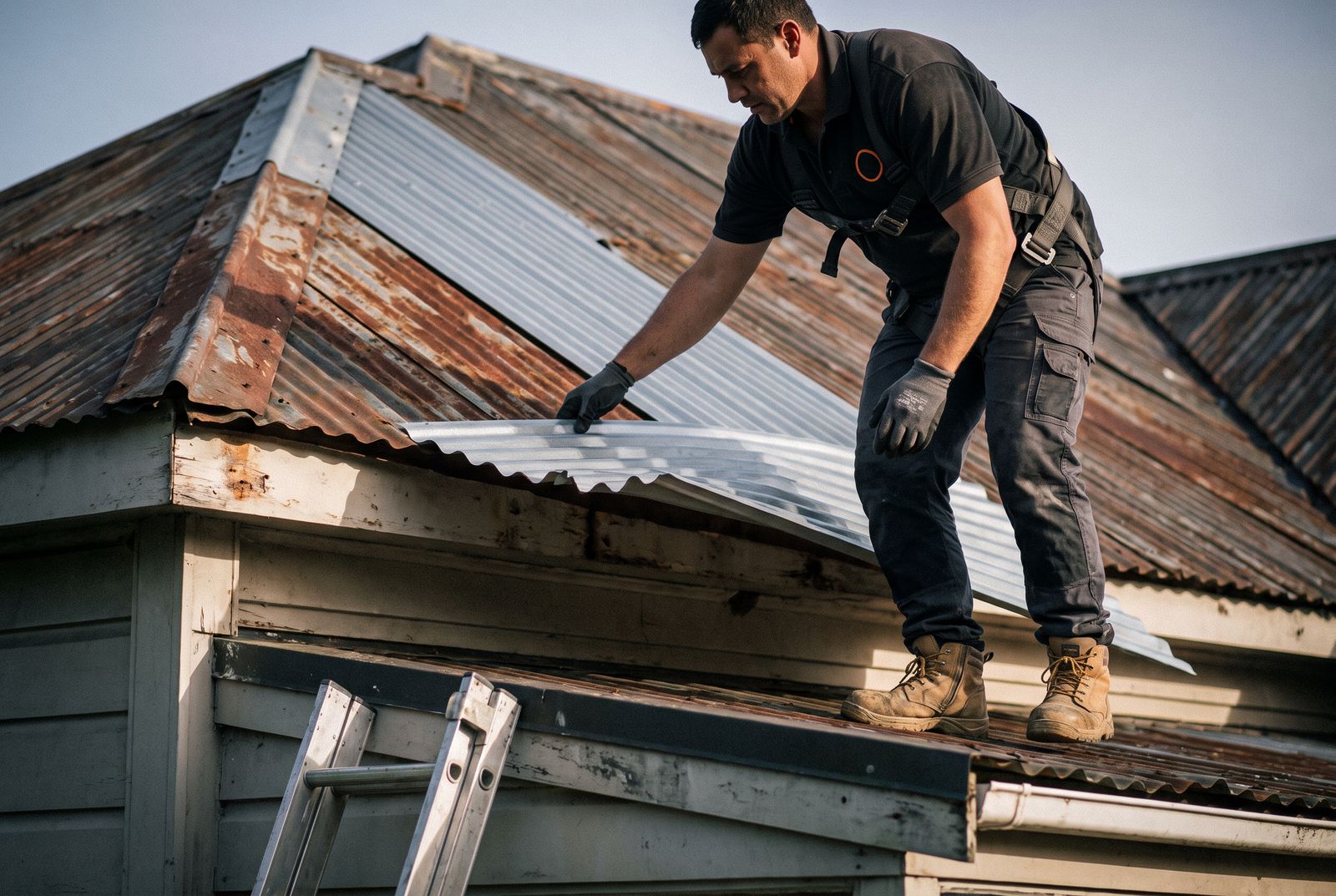 Roof RepairsLeaks, loose sheets, failed flashings and cracked tiles repaired properly, with photos of what we found and fixed.
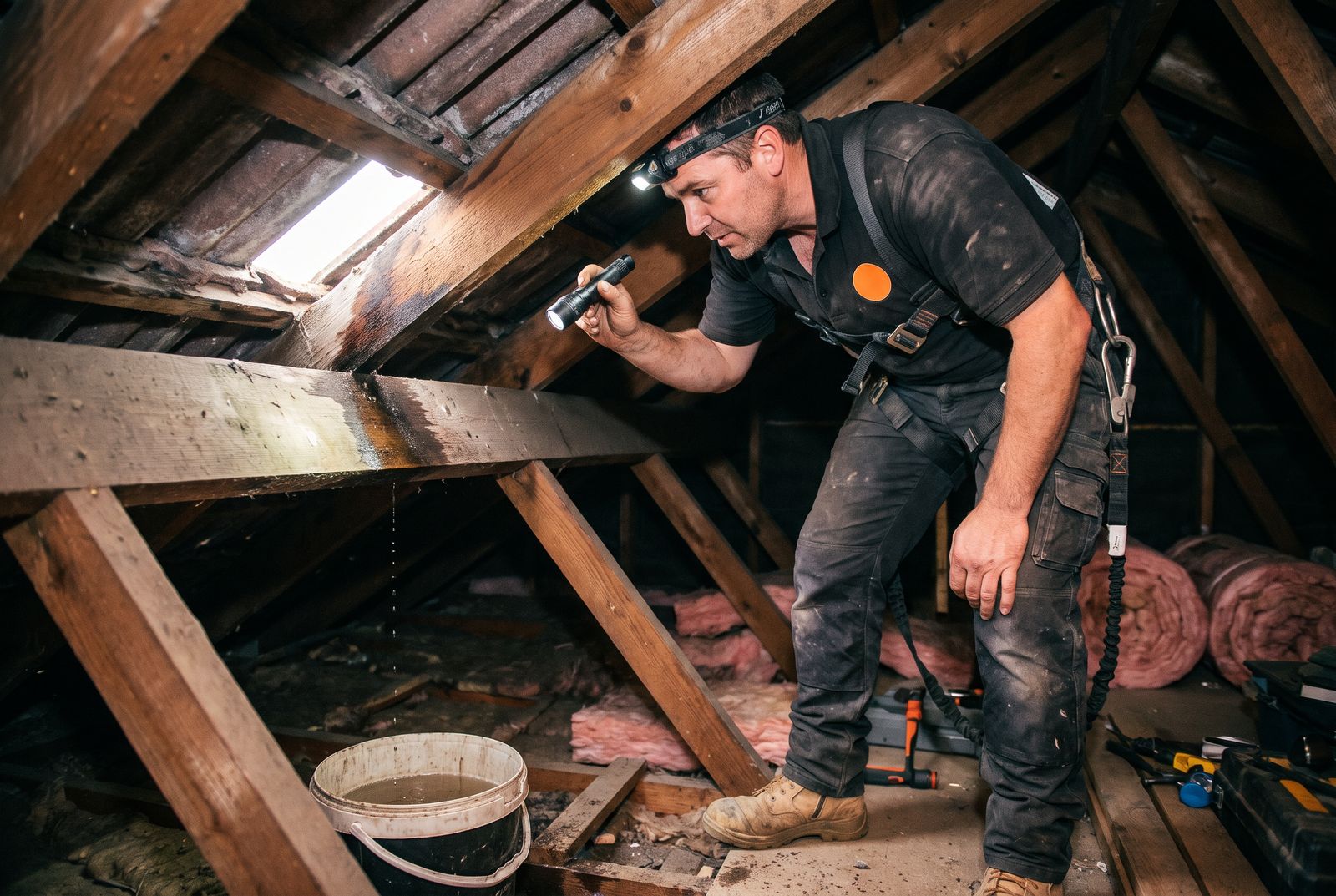 Roof Leak RepairsWe track a leak to its source, which is often nowhere near the stain on your ceiling, and fix the cause.
Read Next
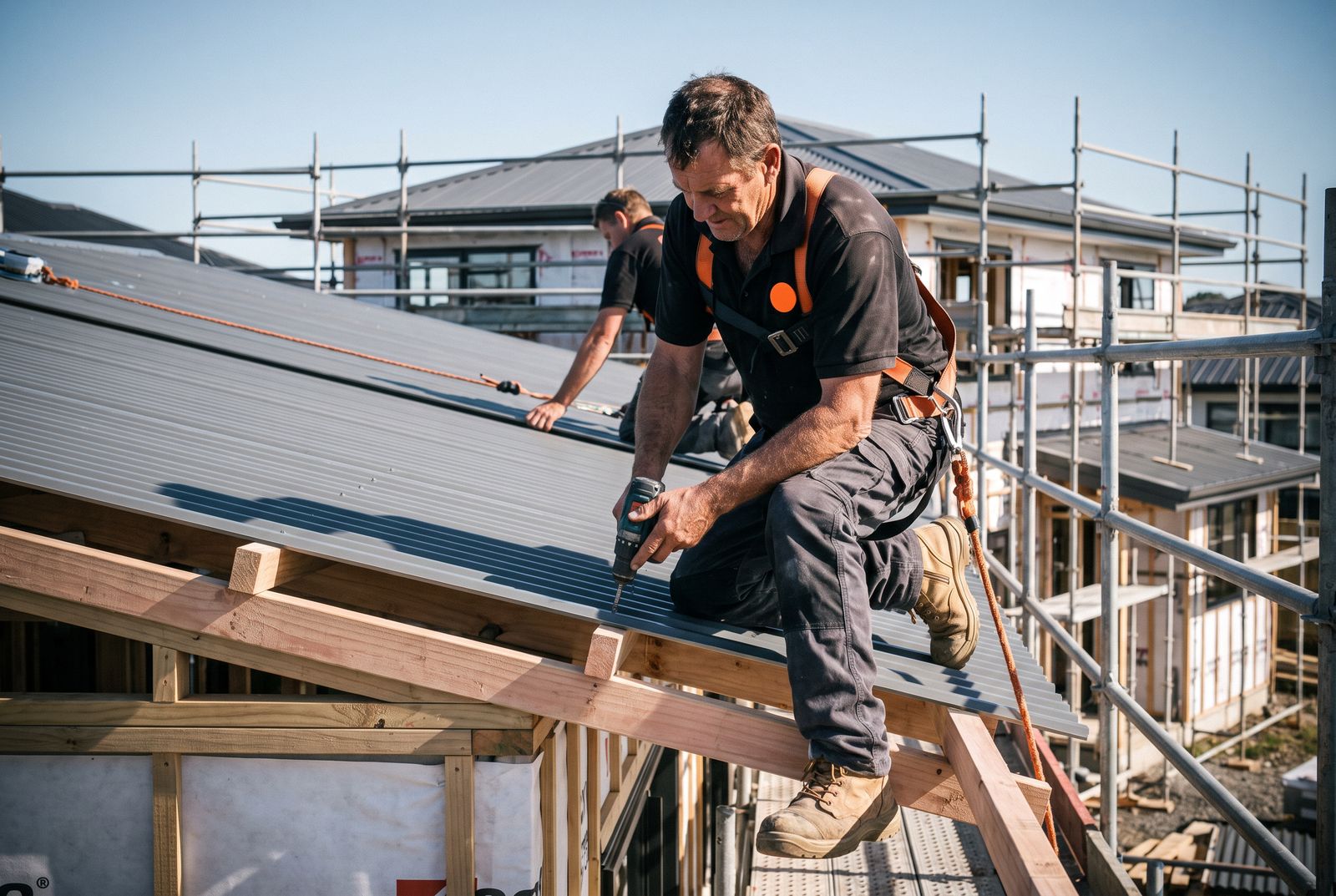
What Wind Zone Is My House In? Wellington Wind Zones Explained
Your wind zone is set for your exact site under NZS 3604, not for your suburb. In Wellington, check your LIM or consent ...
Read article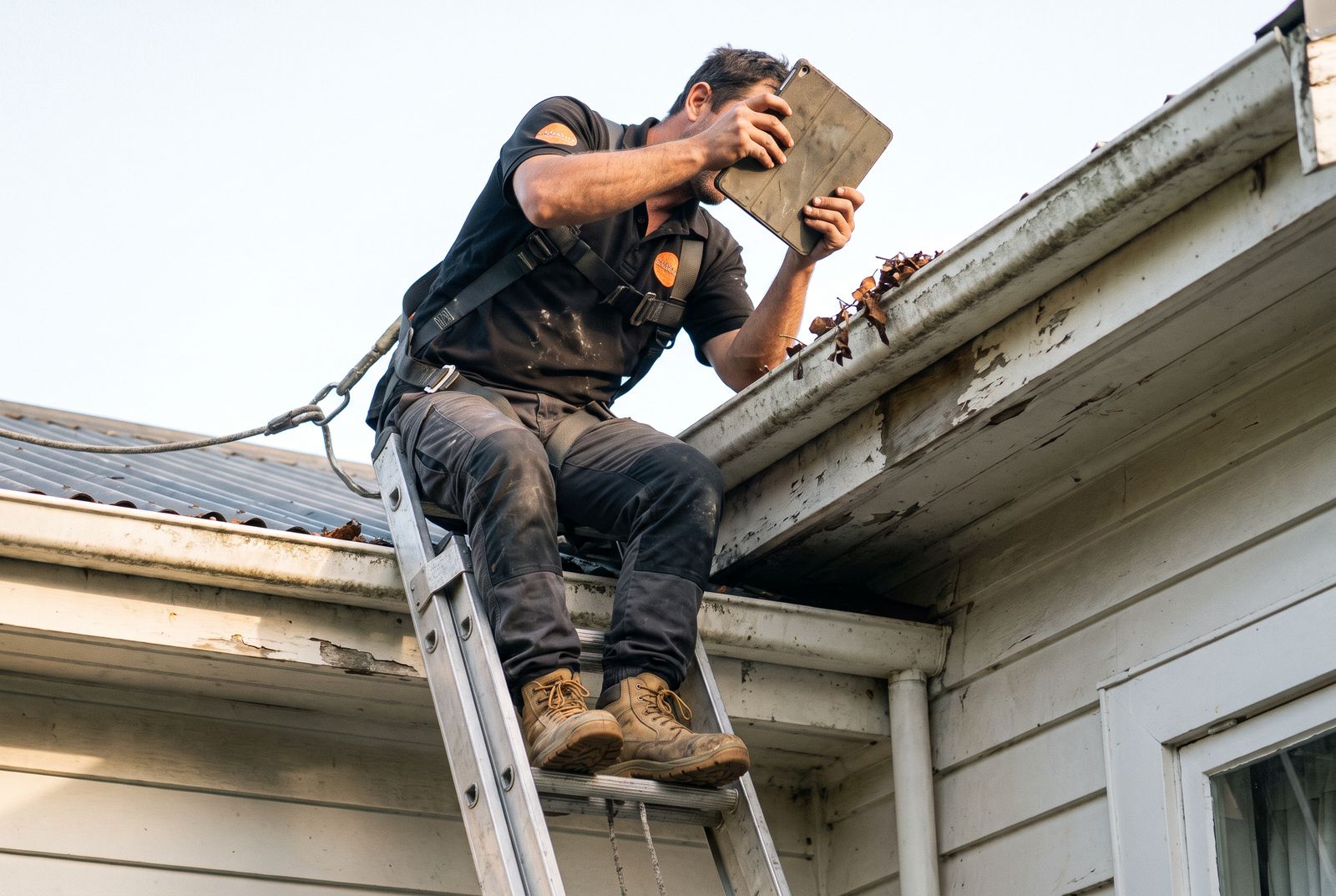
Why Does My Roof Only Leak in a Southerly? Wind-Driven Rain Explained
A roof that only leaks in strong wind and rain usually has a gap that stays dry in calm rain but lets water in when wind...
Read article
Coastal Roofing in Wellington: Corrosion Zones, Salt and Washing
Near the sea in Wellington, choose a roof and fixings rated for the corrosion zone at your exact address, then wash the ...
Read article